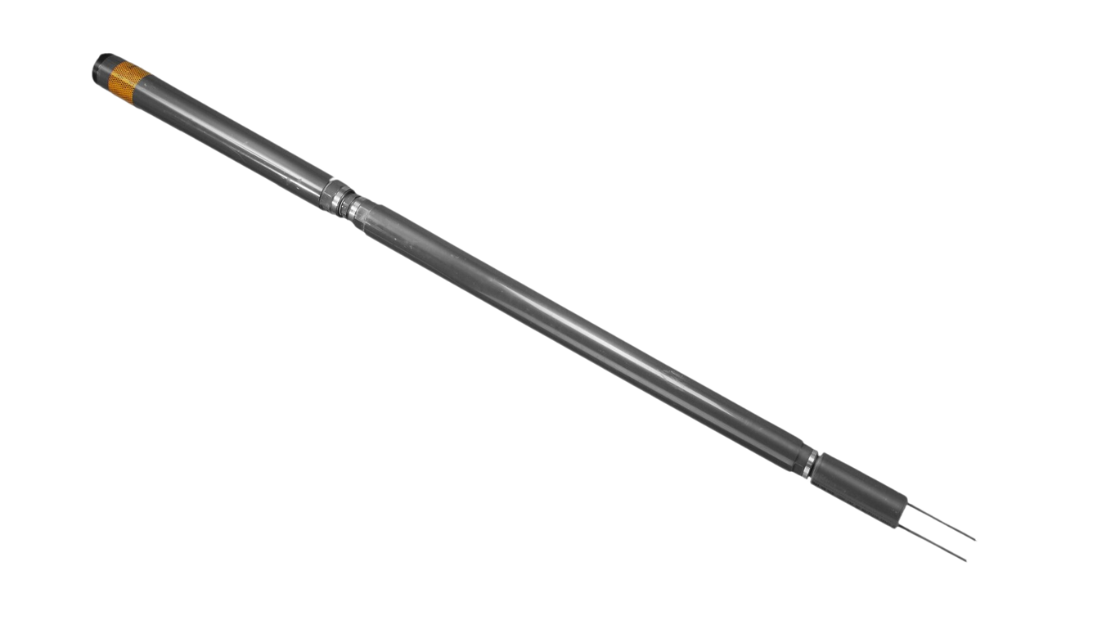
H2S sensors
Hydrogen Sulfide
Sensor for measuring Hydrogen Sulfide in indoor applications.
DATA SHEETS
Description
Description
Hydrogen Sulfide
Range of sensors for measuring gas concentration in indoor environments. The line includes sensors (PRGSAx200 and ESOxxx) with cables and mini-DIN connectors for use with LSI LASTEM data loggers type M-Log (ELO009) and sensors with 4…20 mA output and RS485 Modbus (PRGSAx900 and DSOxxx) that can be used by third-party systems or LSI LASTEM data loggers with terminal block. The sensors are based on electrochemical cell, infrared (CO2) and PID (VOC) technology.
H2S sensors
Highlights
- Wide range of sensors optimized for indoor air quality monitoring;
- Portable and stand-alone applications in indoor environments;
- Sensors with 4…20 mA output and RS485 Modbus and free-wire cable (PRGSAx900 and DSOxxx range). Sensors with mV output, cable and MiniDIN connector (range PRGSAx200 and ESOxxx range);
- Range 0…50 ppm;
- Operative temperature: -40..50 °C;
- Sensor life: 2 years.
- Model codes: PRGSA7200, PRGSA7900, PRGSA7900.1.
FAQ: Frequently Asked Questions
Why is hydrogen sulphide (H₂S) monitoring important?
Hydrogen sulphide (H₂S) is a toxic gas that can be generated during the anaerobic decomposition of organic matter. It may be present in wastewater treatment plants, sewers, landfills, waste-management facilities and other industrial environments. Monitoring H₂S concentration is therefore important for detecting changes in gas levels and supporting the control of operating conditions and air quality.
In which environments and applications is H₂S monitoring useful?
H₂S monitoring is particularly useful in wastewater treatment plants, sewer networks, landfills, composting facilities and other processes where anaerobic degradation can generate hydrogen sulphide. It is also relevant in technical rooms, industrial environments and confined spaces where gas accumulation may occur. LSI LASTEM identifies the waste cycle and indoor monitoring among the applications for its H₂S sensor range.
How does the LSI LASTEM hydrogen sulphide sensor work?
LSI LASTEM H₂S sensors use an electrochemical cell that generates a signal proportional to the concentration of hydrogen sulphide in the air. The range measures concentrations from 0 to 50 ppm and is designed for indoor monitoring applications. The declared sensor life is approximately two years, with an operating temperature range from -40 to 50 °C.
How can LSI LASTEM H₂S sensors be integrated into a monitoring system?
LSI LASTEM H₂S sensors can be used for both portable measurement surveys and fixed continuous monitoring. Models are available with mV output and MiniDIN connectors for LSI LASTEM data loggers, as well as versions with 4–20 mA and RS485 Modbus that can also be integrated into third-party acquisition systems. H₂S can also be monitored together with other gases and environmental parameters for a more complete assessment of plant conditions.
Additional information
Additional information
| Grandezze | |
|---|---|
| Applications | IEQ and environmental comfort, Museums and archaeological sites, Stress and thermal comfort and related quantities portable, Waste cycle |
Product
PRGSA7200-PRGSA7900-PRGSA7900.1
Categories Gas, Indoor sensors, Sensors
Hydrogen Sulfide
Range of sensors for measuring gas concentration in indoor environments. The line includes sensors (PRGSAx200 and ESOxxx) with cables and mini-DIN connectors for use with LSI LASTEM data loggers type M-Log (ELO009) and sensors with 4…20 mA output and RS485 Modbus (PRGSAx900 and DSOxxx) that can be used by third-party systems or LSI LASTEM data loggers with terminal block. The sensors are based on electrochemical cell, infrared (CO2) and PID (VOC) technology.
H2S sensors
Highlights
- Wide range of sensors optimized for indoor air quality monitoring;
- Portable and stand-alone applications in indoor environments;
- Sensors with 4…20 mA output and RS485 Modbus and free-wire cable (PRGSAx900 and DSOxxx range). Sensors with mV output, cable and MiniDIN connector (range PRGSAx200 and ESOxxx range);
- Range 0…50 ppm;
- Operative temperature: -40..50 °C;
- Sensor life: 2 years.
- Model codes: PRGSA7200, PRGSA7900, PRGSA7900.1.
FAQ: Frequently Asked Questions
Why is hydrogen sulphide (H₂S) monitoring important?
Hydrogen sulphide (H₂S) is a toxic gas that can be generated during the anaerobic decomposition of organic matter. It may be present in wastewater treatment plants, sewers, landfills, waste-management facilities and other industrial environments. Monitoring H₂S concentration is therefore important for detecting changes in gas levels and supporting the control of operating conditions and air quality.
In which environments and applications is H₂S monitoring useful?
H₂S monitoring is particularly useful in wastewater treatment plants, sewer networks, landfills, composting facilities and other processes where anaerobic degradation can generate hydrogen sulphide. It is also relevant in technical rooms, industrial environments and confined spaces where gas accumulation may occur. LSI LASTEM identifies the waste cycle and indoor monitoring among the applications for its H₂S sensor range.
How does the LSI LASTEM hydrogen sulphide sensor work?
LSI LASTEM H₂S sensors use an electrochemical cell that generates a signal proportional to the concentration of hydrogen sulphide in the air. The range measures concentrations from 0 to 50 ppm and is designed for indoor monitoring applications. The declared sensor life is approximately two years, with an operating temperature range from -40 to 50 °C.
How can LSI LASTEM H₂S sensors be integrated into a monitoring system?
LSI LASTEM H₂S sensors can be used for both portable measurement surveys and fixed continuous monitoring. Models are available with mV output and MiniDIN connectors for LSI LASTEM data loggers, as well as versions with 4–20 mA and RS485 Modbus that can also be integrated into third-party acquisition systems. H₂S can also be monitored together with other gases and environmental parameters for a more complete assessment of plant conditions.