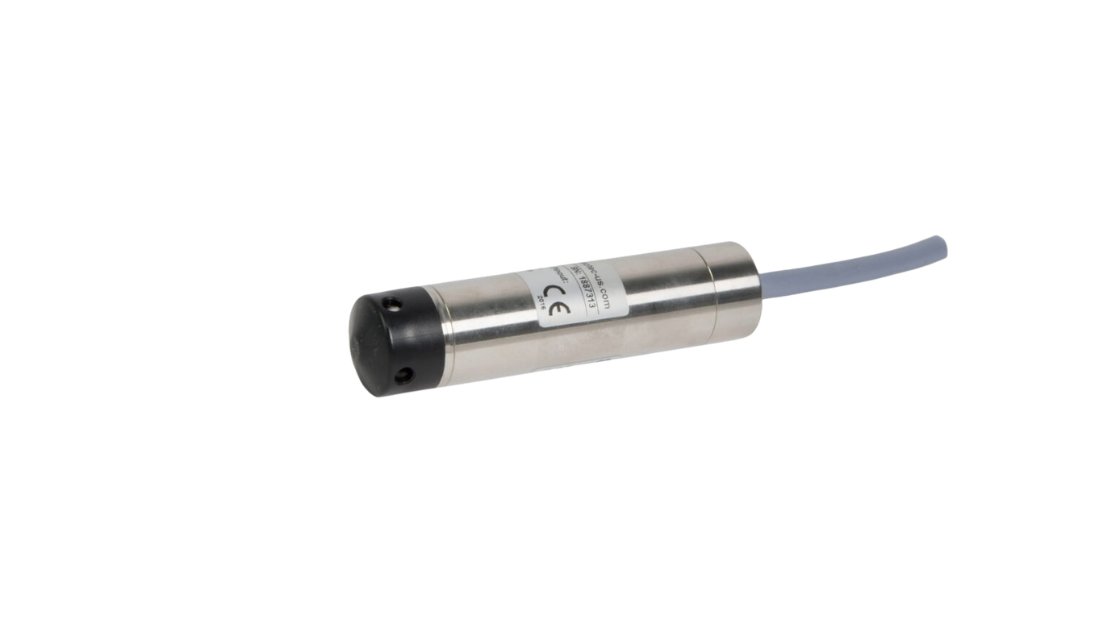
Thermo-Hygrometer Radio output

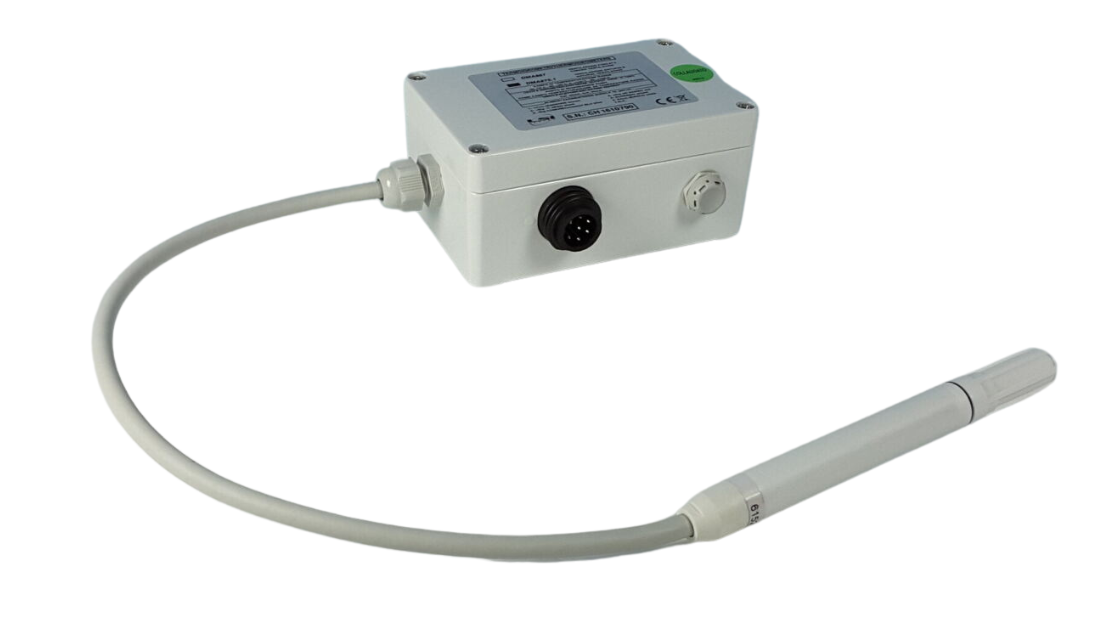
Sensors for ambient air temperature and relative humidity measurements.

Description

Sensor ducts for measuring the temperature and relative humidity of the air in the environment or inside ducts.

In applications where dirty air is present, the sensor can be mounted inside the DYA225 screen in order to prevent dirt from accumulating directly on the sensitive element.


  • Sensor with Radio output;
  • Easy installation of the sensitive part even in small spaces;
  • Calculation of the Dew Point (as an alternative to RH%);
 
  • Easy replacement of the sensitive element;
  • Excellent RH% accuracy (1.5%);
  • Model code: EXP815.1.

What are the advantages of a thermo-hygrometer with radio transmission?

A radio thermo-hygrometer measures air temperature and relative humidity without requiring signal cables between the sensor and the data acquisition system. This simplifies installation and allows the measurement point to be positioned where it is actually needed, including locations that are difficult to reach or where cabling would be intrusive. The LSI LASTEM radio thermo-hygrometer is therefore particularly suitable for distributed environmental monitoring systems.

Where is a wireless thermo-hygrometer particularly useful?

Wireless temperature and humidity measurement is particularly advantageous in museums, archaeological sites, buildings, ducts and other environments where cabling should be minimised or measurement points are located far from the acquisition system. The absence of signal cables also makes the monitoring network easier to modify or expand by adding new measurement points.

Is radio communication suitable for continuous temperature and humidity monitoring?

Yes. Robust radio communication makes it possible to create a distributed network of sensors without physical signal connections, while regularly transmitting measurements to the data acquisition system. This architecture is particularly useful in buildings and installations with multiple measurement points, as it reduces cabling requirements and provides greater flexibility than a fully wired monitoring network.

Which parameters does the LSI LASTEM radio thermo-hygrometer measure?

The EXP815.1 radio thermo-hygrometer measures air temperature and relative humidity, with a declared RH accuracy of 1.5%. The system can also provide dew point as a derived parameter, which is useful for identifying conditions approaching condensation. The sensing element is easy to replace, while its compact dimensions facilitate installation even in confined spaces.
Additional information

Grandezze

,

Applications

Product exp815.1-4 Categories ,

Sensor ducts for measuring the temperature and relative humidity of the air in the environment or inside ducts.

In applications where dirty air is present, the sensor can be mounted inside the DYA225 screen in order to prevent dirt from accumulating directly on the sensitive element.


  • Sensor with Radio output;
  • Easy installation of the sensitive part even in small spaces;
  • Calculation of the Dew Point (as an alternative to RH%);
 
  • Easy replacement of the sensitive element;
  • Excellent RH% accuracy (1.5%);
  • Model code: EXP815.1.

What are the advantages of a thermo-hygrometer with radio transmission?

A radio thermo-hygrometer measures air temperature and relative humidity without requiring signal cables between the sensor and the data acquisition system. This simplifies installation and allows the measurement point to be positioned where it is actually needed, including locations that are difficult to reach or where cabling would be intrusive. The LSI LASTEM radio thermo-hygrometer is therefore particularly suitable for distributed environmental monitoring systems.

Where is a wireless thermo-hygrometer particularly useful?

Wireless temperature and humidity measurement is particularly advantageous in museums, archaeological sites, buildings, ducts and other environments where cabling should be minimised or measurement points are located far from the acquisition system. The absence of signal cables also makes the monitoring network easier to modify or expand by adding new measurement points.

Is radio communication suitable for continuous temperature and humidity monitoring?

Yes. Robust radio communication makes it possible to create a distributed network of sensors without physical signal connections, while regularly transmitting measurements to the data acquisition system. This architecture is particularly useful in buildings and installations with multiple measurement points, as it reduces cabling requirements and provides greater flexibility than a fully wired monitoring network.

Which parameters does the LSI LASTEM radio thermo-hygrometer measure?

The EXP815.1 radio thermo-hygrometer measures air temperature and relative humidity, with a declared RH accuracy of 1.5%. The system can also provide dew point as a derived parameter, which is useful for identifying conditions approaching condensation. The sensing element is easy to replace, while its compact dimensions facilitate installation even in confined spaces.
Related Products