


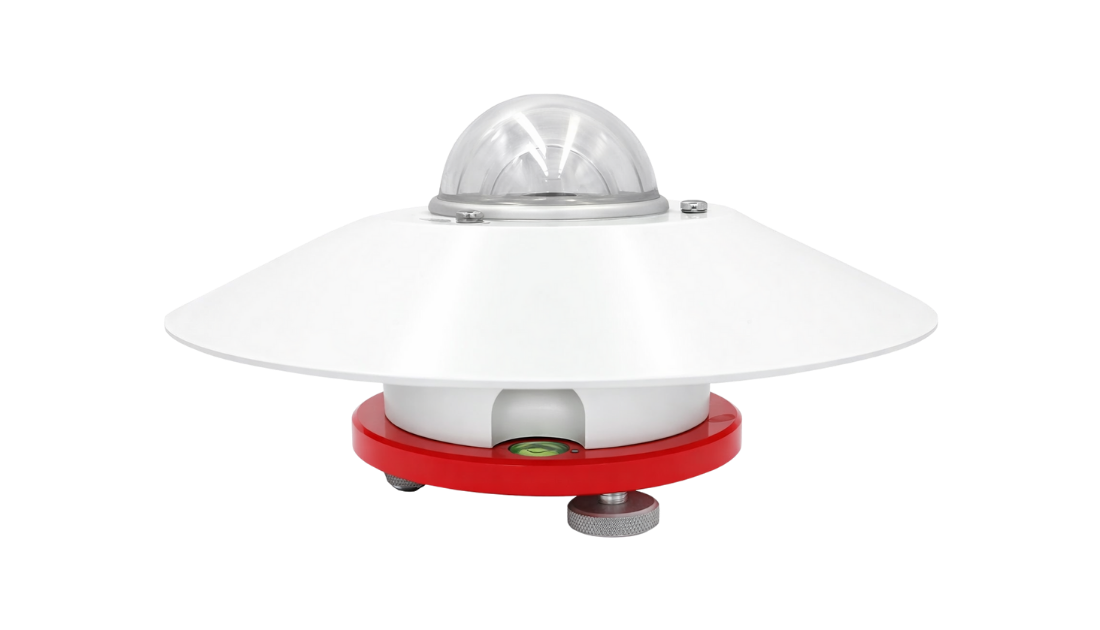


Class A Pyranometers
Sensors for measuring global irradiation
Radiometers for measuring solar irradiance according to ISO 9060 and WMO No. 8 (Part I, Chapter 7). These sensors are classified as Class A ISO9060. With a total daily uncertainty of only 2%, fast response time, these sensors are ideal for users who require high-level accuracy and reliability.
DATA SHEETS
Description
Description
Class A Pyranometers
Highlights
- Spectrally flat Class A pyranometers compliant with ISO 9060:2018
- Sensors ideal for monitoring the performance of solar panels and weather networks
- Various types of outputs (µV, 4…20 mA, RS485)
- Calibration traceable to WRR
- Model with RVH (Recirculating Ventilation and Heating) technology and tilt angle measurement (DPA953.1
- Model codes: DPA252.2, DPA952.3, DPA953.1, DPA952.1.
FAQ: Frequently Asked Questions
Why choose a Class A pyranometer?
A Class A pyranometer is recommended when solar irradiance measurements require high accuracy, stability, and long-term reliability. Compared with lower classes, it must meet stricter requirements for directional response, temperature dependence, non-linearity, and stability, making it suitable for photovoltaic monitoring, meteorology, and scientific research.
Why are Class A pyranometers important in photovoltaic systems?
Accurate irradiance measurement makes it possible to compare the available solar energy with the energy actually produced by the plant. A Class A pyranometer therefore supports more reliable assessment of performance, losses, and anomalies, especially in large photovoltaic plants and applications where even small measurement errors can affect energy yield analysis.
Why use a Class A pyranometer in scientific research?
Scientific research requires accurate, repeatable, and comparable data across different sites, instruments, and time periods. Low measurement uncertainty, a flat spectral response, and calibration traceable to the World Radiometric Reference make LSI LASTEM Class A pyranometers suitable for climate studies, radiometric analyses, meteorological networks, and the validation of environmental and energy models.
Which standards do LSI LASTEM Class A pyranometers comply with?
LSI LASTEM pyranometers are classified as Spectrally Flat Class A according to ISO 9060:2018 and are designed in accordance with the recommendations of WMO No. 8, Part I, Chapter 7, concerning solar radiation measurement. WRR-traceable calibration and the availability of μV, 4–20 mA, and RS485 outputs also facilitate integration into meteorological, photovoltaic, and scientific monitoring systems.
What advantages does the LSI LASTEM ISO/IEC 17025 accredited laboratory offer?
LSI LASTEM has an internal laboratory accredited by ACCREDIA according to ISO/IEC 17025 for the calibration of solar irradiance measuring instruments. This makes it possible to provide metrologically traceable calibration certificates, useful for verifying pyranometer performance, controlling measurement uncertainty, and ensuring reliable data over time for photovoltaic plants, meteorological networks, and research activities.
Additional information
Additional information
Product
DPA252.2 - DPA952.3 - DPA952.1 - DPA953.1
Categories Meteo sensors, Sensors, Solar radiation
Class A Pyranometers
Highlights
- Spectrally flat Class A pyranometers compliant with ISO 9060:2018
- Sensors ideal for monitoring the performance of solar panels and weather networks
- Various types of outputs (µV, 4…20 mA, RS485)
- Calibration traceable to WRR
- Model with RVH (Recirculating Ventilation and Heating) technology and tilt angle measurement (DPA953.1
- Model codes: DPA252.2, DPA952.3, DPA953.1, DPA952.1.
FAQ: Frequently Asked Questions
Why choose a Class A pyranometer?
A Class A pyranometer is recommended when solar irradiance measurements require high accuracy, stability, and long-term reliability. Compared with lower classes, it must meet stricter requirements for directional response, temperature dependence, non-linearity, and stability, making it suitable for photovoltaic monitoring, meteorology, and scientific research.
Why are Class A pyranometers important in photovoltaic systems?
Accurate irradiance measurement makes it possible to compare the available solar energy with the energy actually produced by the plant. A Class A pyranometer therefore supports more reliable assessment of performance, losses, and anomalies, especially in large photovoltaic plants and applications where even small measurement errors can affect energy yield analysis.
Why use a Class A pyranometer in scientific research?
Scientific research requires accurate, repeatable, and comparable data across different sites, instruments, and time periods. Low measurement uncertainty, a flat spectral response, and calibration traceable to the World Radiometric Reference make LSI LASTEM Class A pyranometers suitable for climate studies, radiometric analyses, meteorological networks, and the validation of environmental and energy models.
Which standards do LSI LASTEM Class A pyranometers comply with?
LSI LASTEM pyranometers are classified as Spectrally Flat Class A according to ISO 9060:2018 and are designed in accordance with the recommendations of WMO No. 8, Part I, Chapter 7, concerning solar radiation measurement. WRR-traceable calibration and the availability of μV, 4–20 mA, and RS485 outputs also facilitate integration into meteorological, photovoltaic, and scientific monitoring systems.
What advantages does the LSI LASTEM ISO/IEC 17025 accredited laboratory offer?
LSI LASTEM has an internal laboratory accredited by ACCREDIA according to ISO/IEC 17025 for the calibration of solar irradiance measuring instruments. This makes it possible to provide metrologically traceable calibration certificates, useful for verifying pyranometer performance, controlling measurement uncertainty, and ensuring reliable data over time for photovoltaic plants, meteorological networks, and research activities.


