Class C Pyranometers
Sensors for measuring global irradiation
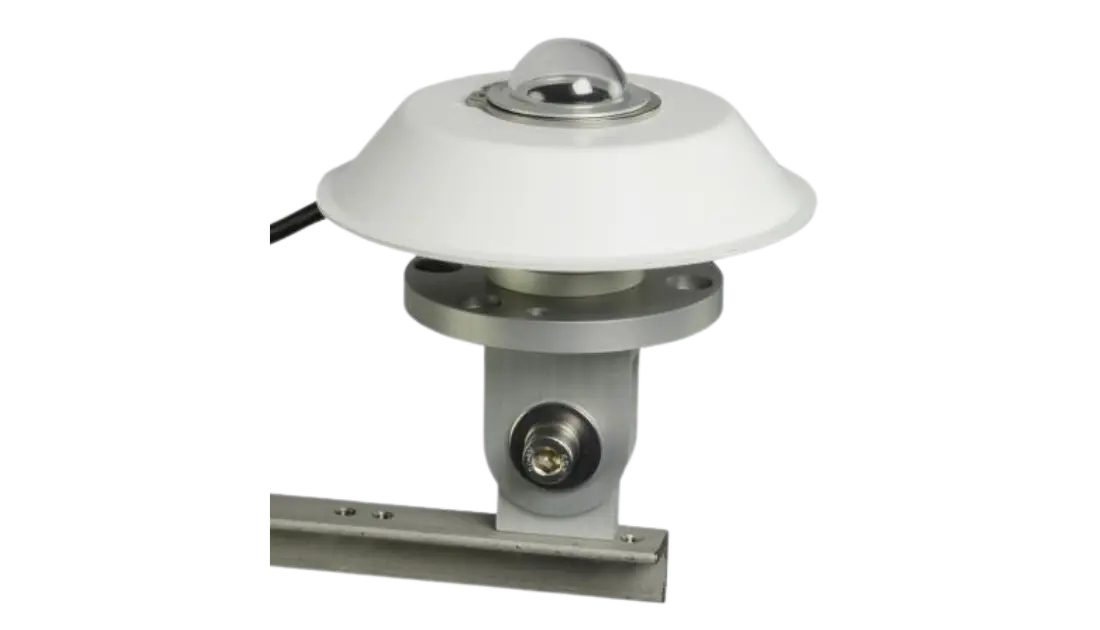
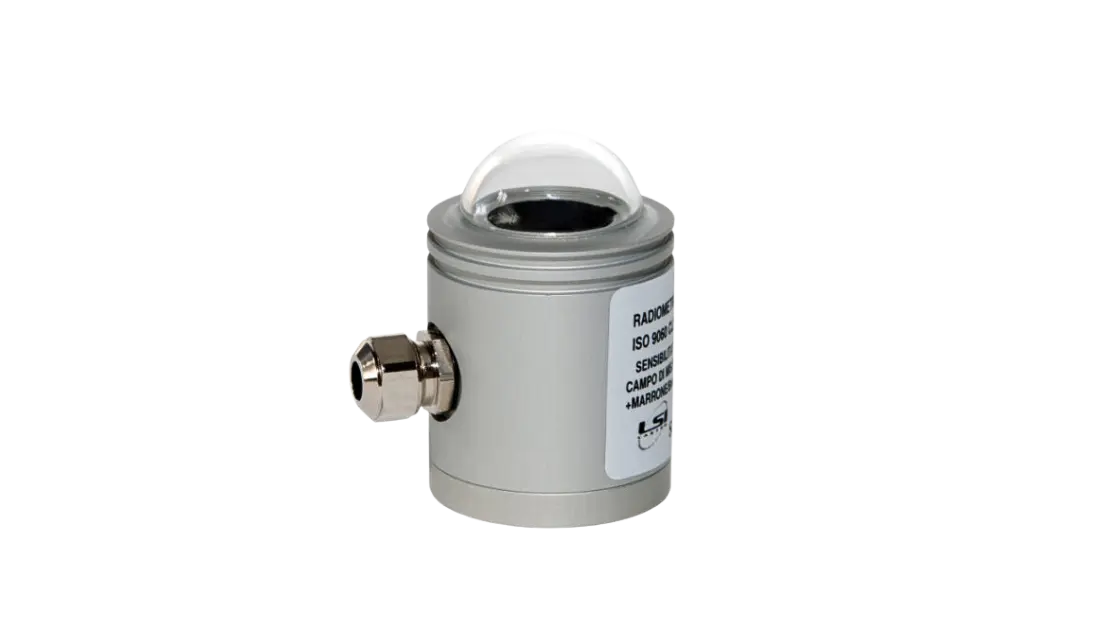
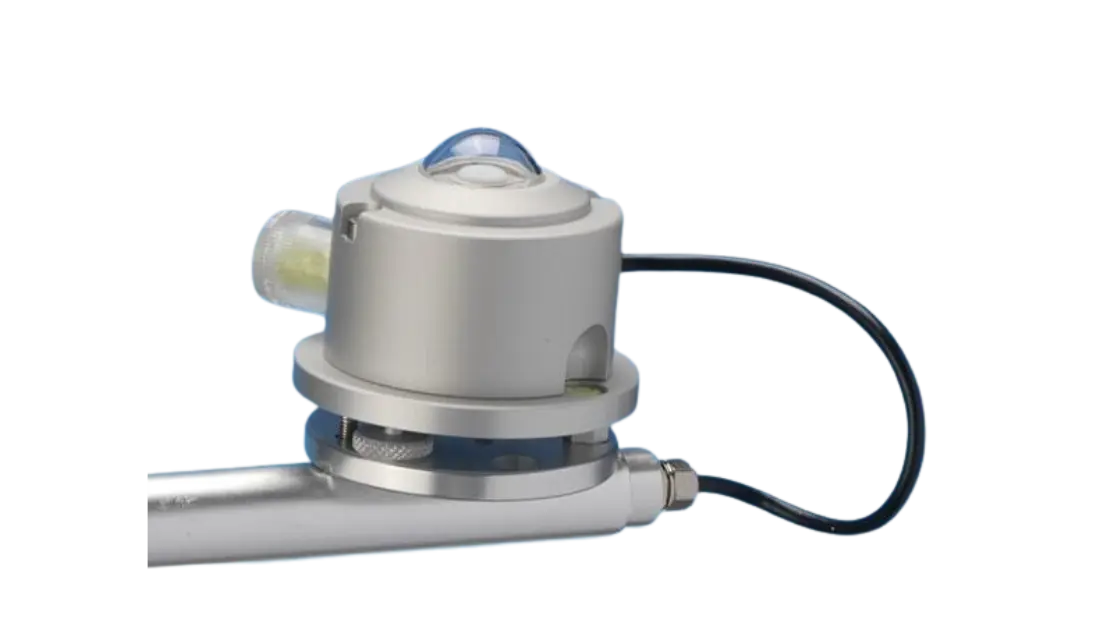
Radiometer for measuringsolar irradiance, Class C according to ISO 9060 and WMO No. 8. This sensor is a good compromise for basic meteorological, agrometeorological and solar energy applications.
DATA SHEET
Description
Description
Class C pyranometers
Highlights
- Pyranometers spectrally flat Class C (Second Class). Compliant with EC 61724-1: 2017;
- Electrical insulation (DPA863-983), Galvanic insulation (DPA983);
- WRR traceable calibration;
- Modbus registers for instantaneous values, Average/Min/Max values over programmable period (DPA983);
- Power supply 10…30 Vac/dc (DPA863/983);
- Ideal sensor for monitoring the performance of solar panels and weather network;
- Model codes: DPA863, DPA053A, DPA983.
FAQ: Frequently Asked Questions
When is a Class C pyranometer recommended?
A Class C pyranometer is recommended when global solar irradiance needs to be measured with a level of accuracy suitable for basic applications, without requiring the higher performance of Class A or B instruments. It is suitable for widespread meteorological networks, agrometeorology, environmental monitoring, and technical systems where simplicity and cost containment are important factors.
What is the difference between a Class C pyranometer and Class A or B instruments?
The three classes are defined by ISO 9060:2018 and differ in performance requirements such as stability, directional response, temperature dependence, non-linearity, and response time. Class C represents the basic accuracy level and is appropriate when high-precision measurements or advanced scientific and performance analyses are not required.
Which standards do LSI LASTEM Class C pyranometers comply with?
LSI LASTEM pyranometers are classified as Spectrally Flat Class C according to ISO 9060:2018 and are designed in accordance with the recommendations of WMO No. 8 for solar radiation measurement. The range is suitable for basic monitoring systems in meteorology, agrometeorology, and energy applications.
Which features facilitate the integration of LSI LASTEM Class C pyranometers?
The range includes models with direct output, 0/4–20 mA, and RS485 Modbus, allowing integration with different data loggers and acquisition systems. Calibration traceable to the World Radiometric Reference, electrical isolation available on selected models, and the possibility of acquiring instantaneous, average, minimum, and maximum values support practical and reliable monitoring.
Additional information
Additional information
Product
DPA863-DPA983-DPA053A
Categories Meteo sensors, Sensors, Solar radiation
Class C pyranometers
Highlights
- Pyranometers spectrally flat Class C (Second Class). Compliant with EC 61724-1: 2017;
- Electrical insulation (DPA863-983), Galvanic insulation (DPA983);
- WRR traceable calibration;
- Modbus registers for instantaneous values, Average/Min/Max values over programmable period (DPA983);
- Power supply 10…30 Vac/dc (DPA863/983);
- Ideal sensor for monitoring the performance of solar panels and weather network;
- Model codes: DPA863, DPA053A, DPA983.
FAQ: Frequently Asked Questions
When is a Class C pyranometer recommended?
A Class C pyranometer is recommended when global solar irradiance needs to be measured with a level of accuracy suitable for basic applications, without requiring the higher performance of Class A or B instruments. It is suitable for widespread meteorological networks, agrometeorology, environmental monitoring, and technical systems where simplicity and cost containment are important factors.
What is the difference between a Class C pyranometer and Class A or B instruments?
The three classes are defined by ISO 9060:2018 and differ in performance requirements such as stability, directional response, temperature dependence, non-linearity, and response time. Class C represents the basic accuracy level and is appropriate when high-precision measurements or advanced scientific and performance analyses are not required.
Which standards do LSI LASTEM Class C pyranometers comply with?
LSI LASTEM pyranometers are classified as Spectrally Flat Class C according to ISO 9060:2018 and are designed in accordance with the recommendations of WMO No. 8 for solar radiation measurement. The range is suitable for basic monitoring systems in meteorology, agrometeorology, and energy applications.
Which features facilitate the integration of LSI LASTEM Class C pyranometers?
The range includes models with direct output, 0/4–20 mA, and RS485 Modbus, allowing integration with different data loggers and acquisition systems. Calibration traceable to the World Radiometric Reference, electrical isolation available on selected models, and the possibility of acquiring instantaneous, average, minimum, and maximum values support practical and reliable monitoring.