
Multiparameter Radio Sensors
Design and features suitable for museum applications
Sensors for indoor measurements with radio communication (868 MHz) having good ability to cross barriers such as perimeter walls.
DATA SHEETS
Description
Description
Design and features suitable for museum applications
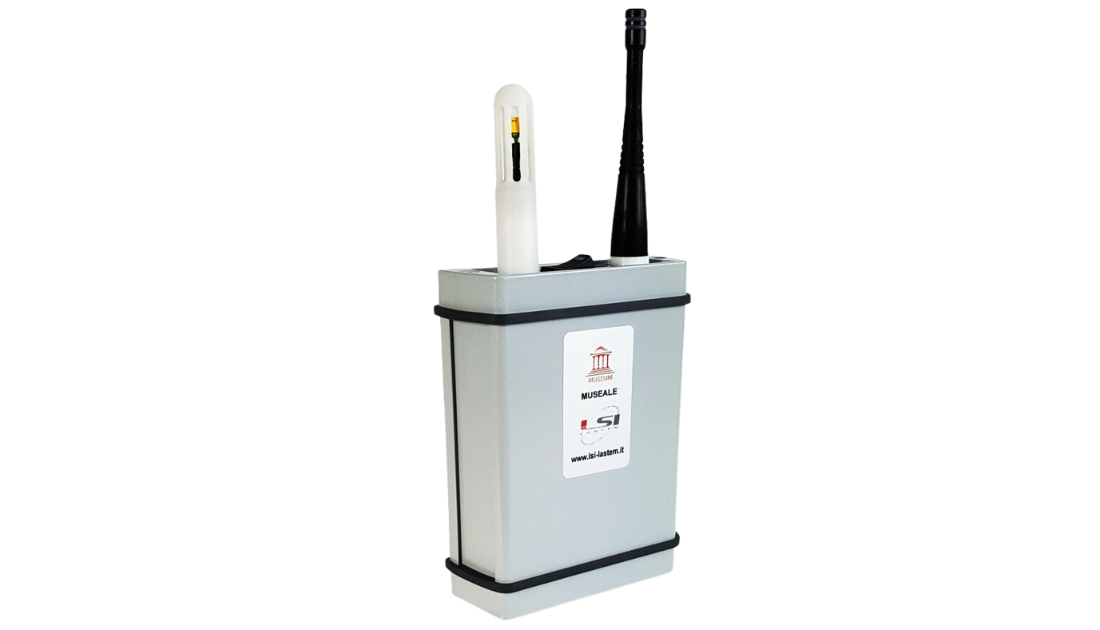
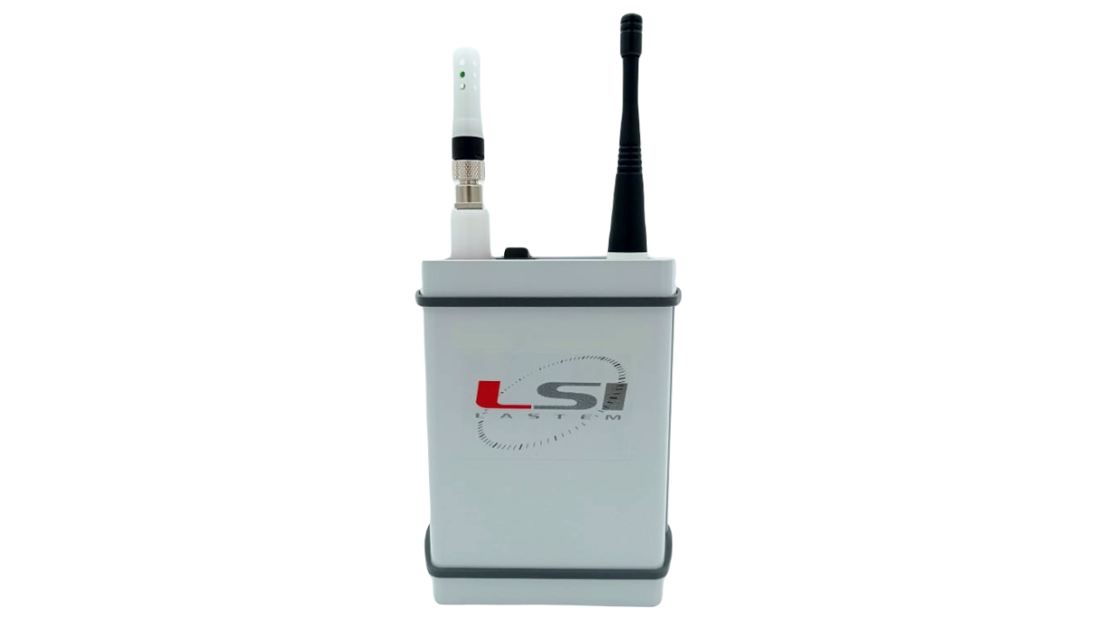
Design and features suitable for museum applications Radio Multiparameter Sensors are wireless sensors for air temperature, relative humidity, contact temperature and lux measurements, depending on the models.
They are equipped with radio communication (869,450 MHz) to data logger.
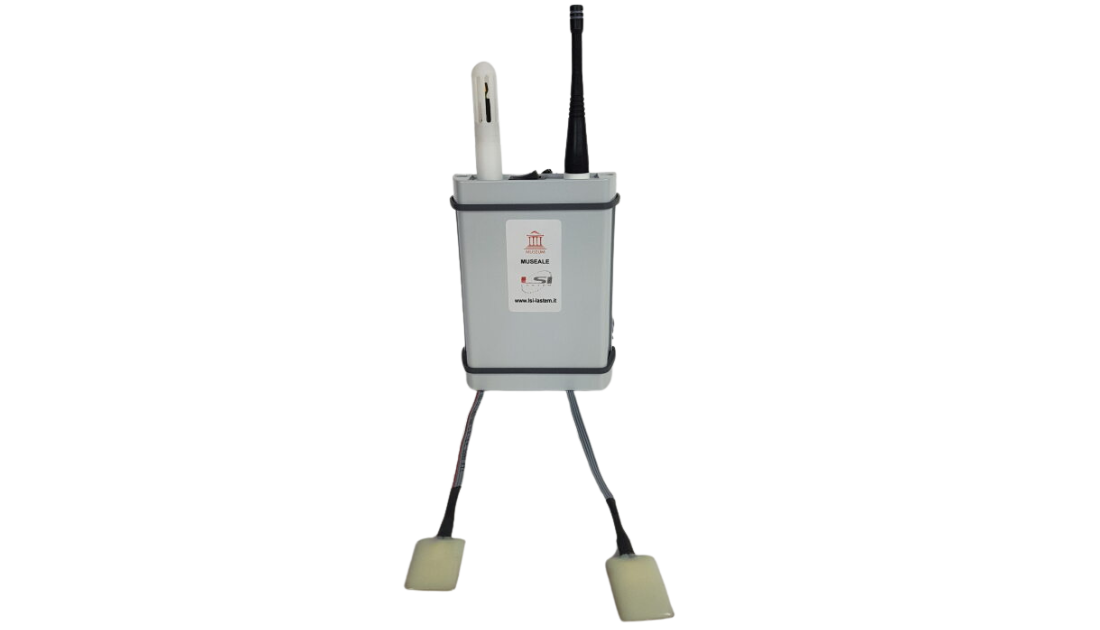
Three sensor versions are available, two of which are equipped with two additional inputs for cable connection to external sensors:
- EXP811.1 (2 temperature sensors);
- EXP813.1 (N.1 temperature sensor, N.1 lux meter sensor).
Thermohygrometer (radio)
Highlights
- Radio sensor for measurement of: temperature, RH%, contact temperature and lux depending on the models;
- Version with air temperature and RH% (EXP812.1);
- Versions with additional sensors connected by cable: 2 contact temperature sensors (EXP811.1); a contact temperature sensor and a lux sensor (EXP813.1);
- Replaceable integrated T and RH sensor;
- Design and features suitable for museum applications;
- Long radio range distance (600m);
- Replaceable integrated T and RH sensor;
- Design and features suitable for museum applications;
- Long radio range distance (600m);
- The radio frequency of 868 MHz allows the signal to pass through even thick barriers such as perimeter walls;
- Long battery life: 2 years;
- Connection to LSI LASTEM data logger by means of the EXP301 radio receiver;
- Model codes: EXP811.1, EXP812.1, EXP813.1.
FAQ: Frequently Asked Questions
What are LSI LASTEM radio multiparameter sensors used for?
LSI LASTEM radio multiparameter sensors are designed for wireless monitoring of air temperature, relative humidity and, depending on the model, surface temperature and illuminance. They are particularly useful where environmental parameters need to be monitored without extensive signal cabling, such as museums, data centres, buildings, archives and other indoor environments where continuous measurement and easy installation are important.
Why are LSI LASTEM radio sensors particularly suitable for museums and buildings?
Wireless monitoring reduces the need to install cables throughout the monitored environment, which is especially valuable in museums, historic buildings, archives and spaces where interventions on the existing infrastructure should be minimised. The 869.450 MHz radio frequency also provides good ability to pass through obstacles such as perimeter walls, helping create distributed monitoring networks across several rooms.
Can radio multiparameter sensors also be used in data centres?
Yes. In data centres, they can be used to create a distributed network for air temperature and relative humidity monitoring without requiring signal cables between every measurement point and the acquisition system. Versions with additional inputs can also connect external temperature sensors, making the system suitable for monitoring multiple points and surfaces within the facility.
Which features make these sensors suitable for continuous wireless monitoring?
The sensors combine long-range radio communication, with a declared line-of-sight range of up to 600 m, battery life of approximately two years and a replaceable integrated temperature and relative humidity sensor. Data are transmitted to LSI LASTEM data loggers through the EXP301 radio receiver. These features make it possible to build robust distributed monitoring systems in museums, data centres, buildings and other environments where extensive cabling should be avoided.
Additional information
Additional information
| Grandezze | |
|---|---|
| Applications | IEQ and environmental comfort, Museums and archaeological sites |
Product
EXP811.1-EXP812.1-EXP813.1
Categories Indoor sensors, Multiparameter sensors, Sensors
Design and features suitable for museum applications
Design and features suitable for museum applications Radio Multiparameter Sensors are wireless sensors for air temperature, relative humidity, contact temperature and lux measurements, depending on the models.
They are equipped with radio communication (869,450 MHz) to data logger.
Three sensor versions are available, two of which are equipped with two additional inputs for cable connection to external sensors:
- EXP811.1 (2 temperature sensors);
- EXP813.1 (N.1 temperature sensor, N.1 lux meter sensor).
Thermohygrometer (radio)
Highlights
- Radio sensor for measurement of: temperature, RH%, contact temperature and lux depending on the models;
- Version with air temperature and RH% (EXP812.1);
- Versions with additional sensors connected by cable: 2 contact temperature sensors (EXP811.1); a contact temperature sensor and a lux sensor (EXP813.1);
- Replaceable integrated T and RH sensor;
- Design and features suitable for museum applications;
- Long radio range distance (600m);
- Replaceable integrated T and RH sensor;
- Design and features suitable for museum applications;
- Long radio range distance (600m);
- The radio frequency of 868 MHz allows the signal to pass through even thick barriers such as perimeter walls;
- Long battery life: 2 years;
- Connection to LSI LASTEM data logger by means of the EXP301 radio receiver;
- Model codes: EXP811.1, EXP812.1, EXP813.1.
FAQ: Frequently Asked Questions
What are LSI LASTEM radio multiparameter sensors used for?
LSI LASTEM radio multiparameter sensors are designed for wireless monitoring of air temperature, relative humidity and, depending on the model, surface temperature and illuminance. They are particularly useful where environmental parameters need to be monitored without extensive signal cabling, such as museums, data centres, buildings, archives and other indoor environments where continuous measurement and easy installation are important.
Why are LSI LASTEM radio sensors particularly suitable for museums and buildings?
Wireless monitoring reduces the need to install cables throughout the monitored environment, which is especially valuable in museums, historic buildings, archives and spaces where interventions on the existing infrastructure should be minimised. The 869.450 MHz radio frequency also provides good ability to pass through obstacles such as perimeter walls, helping create distributed monitoring networks across several rooms.
Can radio multiparameter sensors also be used in data centres?
Yes. In data centres, they can be used to create a distributed network for air temperature and relative humidity monitoring without requiring signal cables between every measurement point and the acquisition system. Versions with additional inputs can also connect external temperature sensors, making the system suitable for monitoring multiple points and surfaces within the facility.
Which features make these sensors suitable for continuous wireless monitoring?
The sensors combine long-range radio communication, with a declared line-of-sight range of up to 600 m, battery life of approximately two years and a replaceable integrated temperature and relative humidity sensor. Data are transmitted to LSI LASTEM data loggers through the EXP301 radio receiver. These features make it possible to build robust distributed monitoring systems in museums, data centres, buildings and other environments where extensive cabling should be avoided.