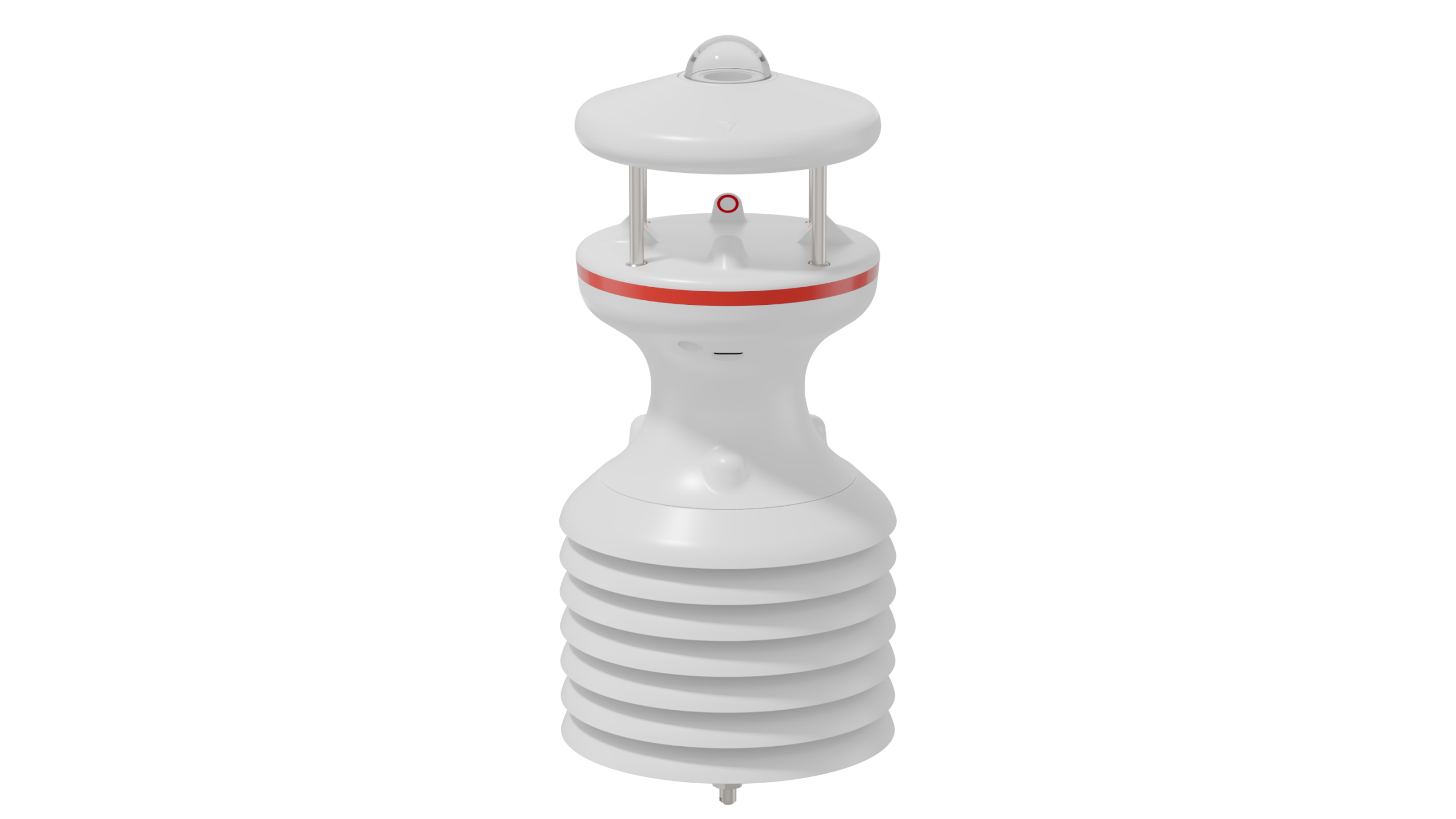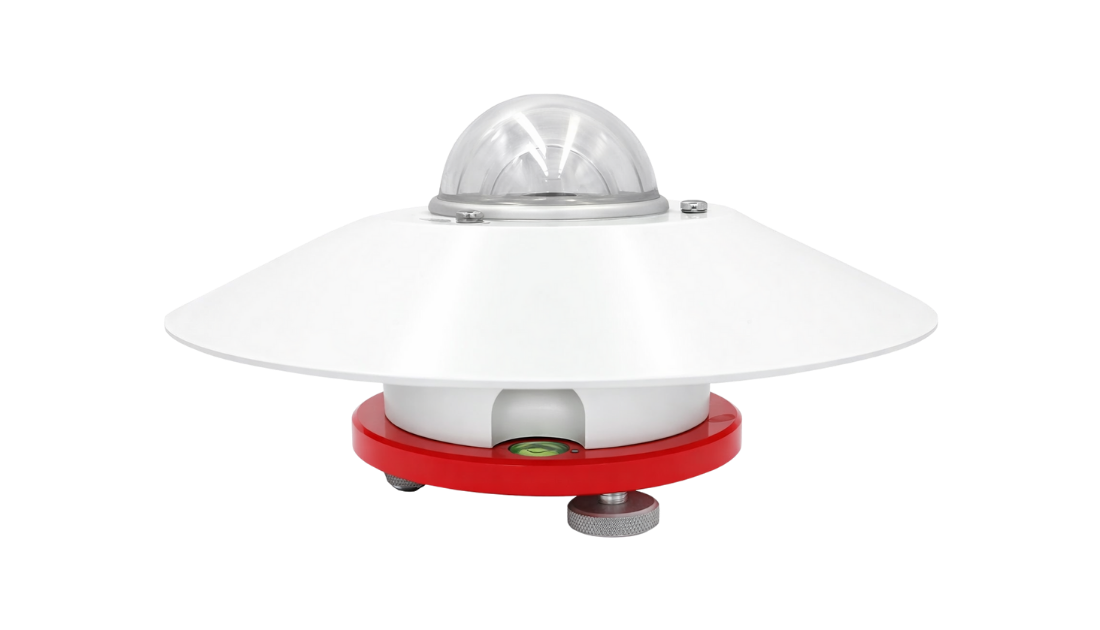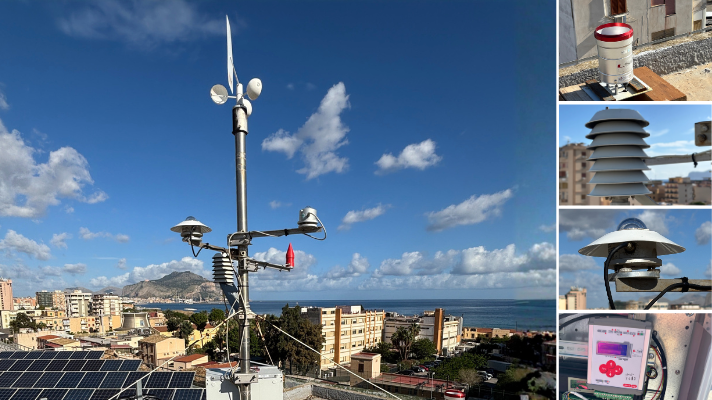


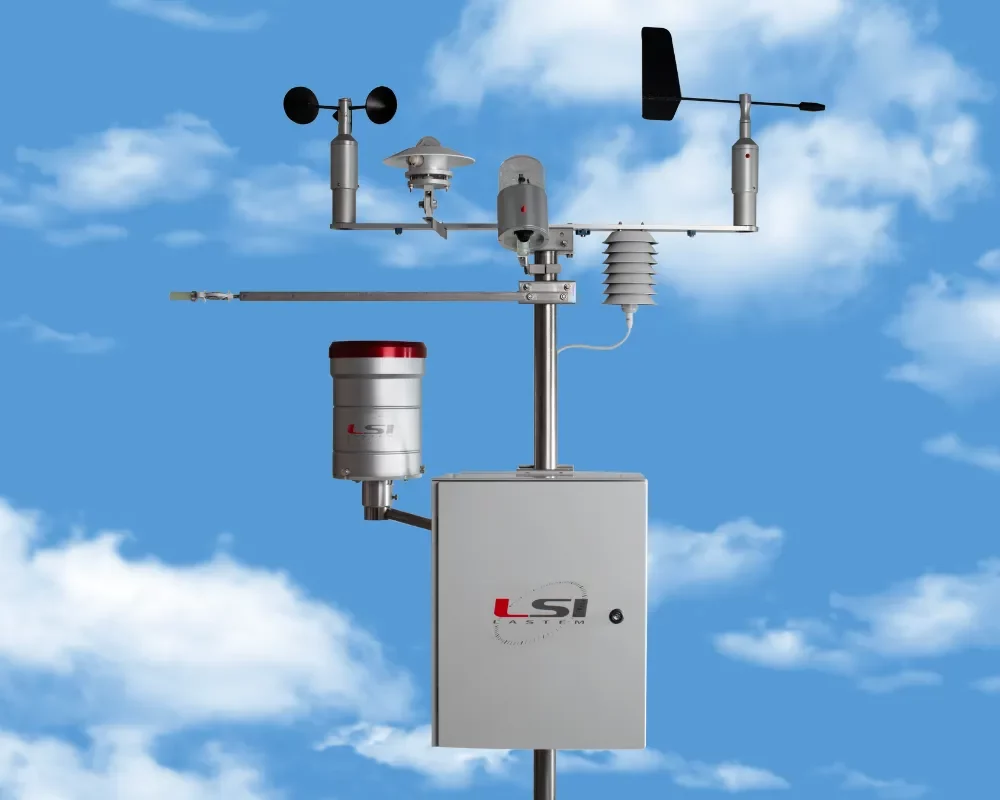
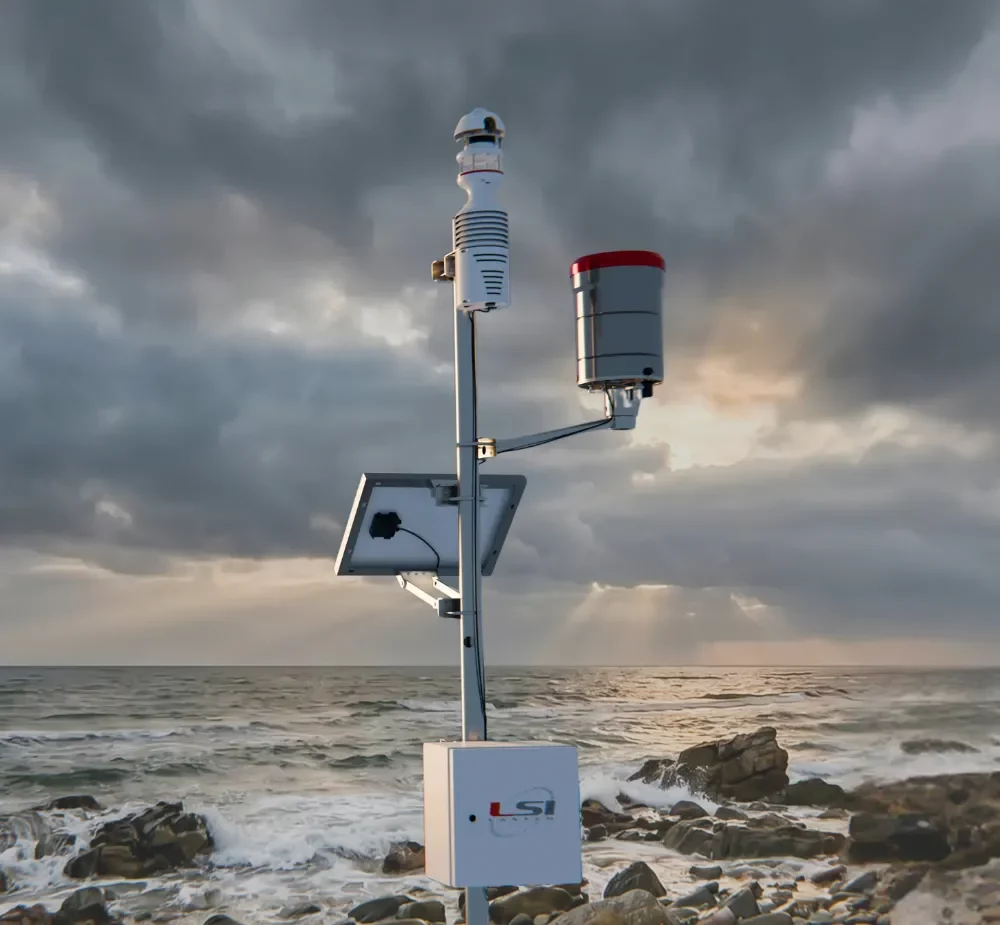
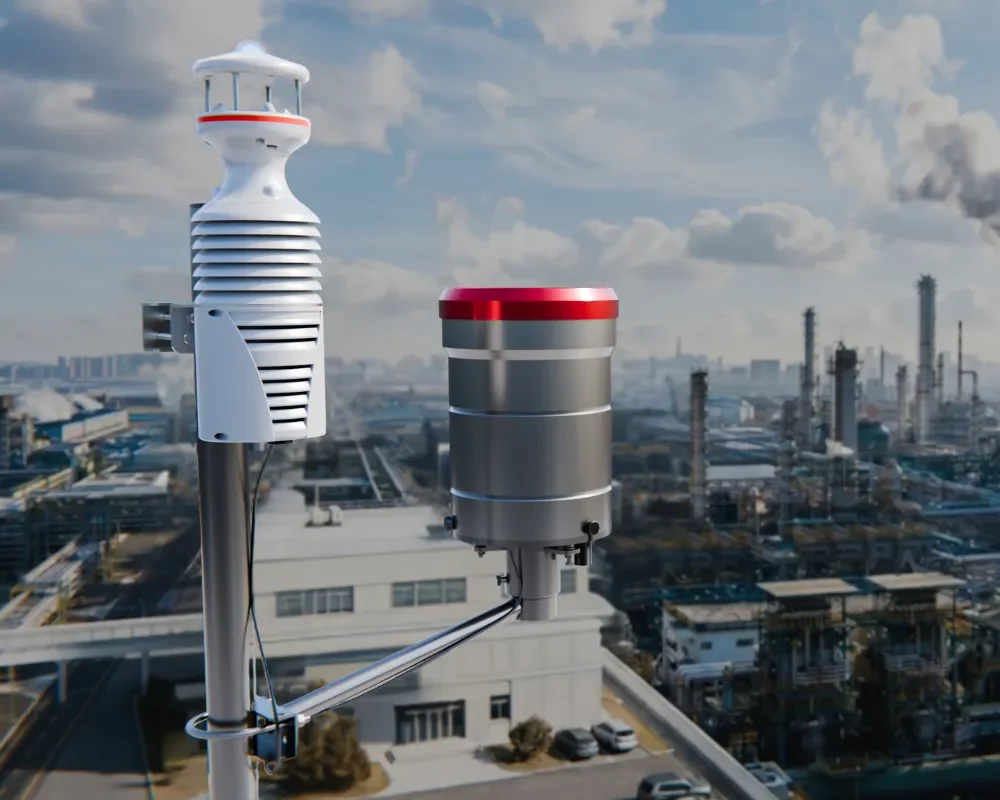
A weather station tracks changes in the atmosphere by measuring air temperature and humidity, pressure, wind, precipitation and solar radiation. Depending on the application, it can also include visibility, snow, evaporation and soil parameters. WMO-No. 8 is the main international reference for instruments, observation methods and sensor exposure.
The data logger turns these measurements into usable information: it acquires the signals, calculates averages, extremes and cumulative values, stores the data and sends them to servers, cloud platforms or third-party systems. The resulting time series, statistics and alarms support meteorology, climatology, research, environmental management and early warning.
An accurate sensor alone is not enough: data reliability also depends on where and how it is installed. Height, obstacles, exposure to radiation and ground characteristics can reduce how representative the measurement is. WMO-No. 8 and ISO 19289:2015 therefore classify the exposure of each variable separately, so temperature, precipitation and wind may have different exposure classes at the same site.
Comparing time series also requires suitable sampling, continuous power, maintenance, calibration, quality checks and complete metadata.
LSI LASTEM single- or multiparameter sensors connect to Alpha-Log and E-Log or send data directly to remote systems, while ENVIRO CUBE brings multiple stations together and manages historical series, comparisons, thresholds and alarms.
In Air Quality Monitoring Systems (AQMS), meteorological data provide the context in which pollutants are measured. Wind, temperature, humidity, pressure, precipitation and radiation describe the conditions that influence transport and dispersion.
Wind speed and direction help reconstruct the movement and possible origin of air masses; temperature and radiation affect atmospheric mixing, while humidity and rain influence how long particles and compounds remain in the air and how they are deposited. Analysing these data together makes it possible to relate concentrations, sources and atmospheric conditions.
Representative measurements, especially of wind, require the exposure criteria in WMO-No. 8 and ISO 19289:2015 to be followed. LSI LASTEM stations can operate independently or integrate with AQMS, analysers, control centres and dispersion models through analogue, serial and Ethernet outputs and standard protocols.
Meteorological observations and monitoring
Air quality and temporary monitoring
A weather station can measure air temperature and humidity, atmospheric pressure, wind speed and direction, precipitation and solar radiation. Depending on the application, it can be extended to measure visibility, snow, lightning, soil temperature and water content, and other environmental variables.
A meteorological measurement is representative only when the sensor is installed correctly. Height, exposure, distance from obstacles and site characteristics can affect the data; WMO-No. 8 therefore provides guidance on instruments, observation methods and correct sensor exposure.
Data loggers such as Alpha-Log and E-Log acquire and process measurements, store them locally and can transmit them to servers or cloud platforms. ENVIRO CUBE centralises multiple stations, compares different sites, displays historical series and manages thresholds and alarms.
Weather stations do not measure pollutants, but they provide the context needed to interpret AQMS data. Wind, temperature, humidity, precipitation and radiation help explain pollutant transport, dispersion, deposition and accumulation, and can provide input to atmospheric dispersion models.
Contact LSI LASTEM to define the sensors, acquisition, communication and data management for your weather monitoring network.