


Environmental monitoring at the Rocca di Gradara: how data protects historical heritage
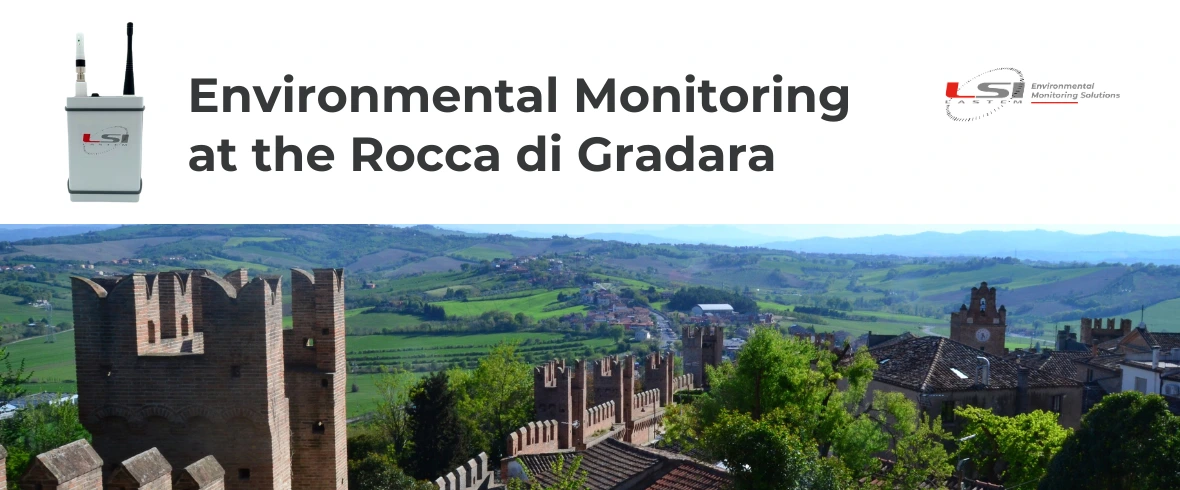
In historical and museum sites, heritage conservation depends not only on the quality of restoration but also, and increasingly, on the ability to monitor the environment surrounding the artworks. Temperature and humidity, often perceived as neutral factors, are actually among the main causes of deterioration of cultural heritage in the medium and long term.
The Rocca di Gradara is a prime example of this challenge. Not only is it one of the most visited cultural sites in the Marche region, but it is also a true museum-house, where historic furnishings, wooden artifacts, textiles, and paintings coexist with a constant flow of visitors. In this context, continuous environmental monitoring becomes a strategic tool for preventive conservation.
This is where the microclimate monitoring project, carried out with LSI LASTEM equipment, comes in, designed to transform environmental data into concrete decisions to protect heritage.
Why monitor the microclimate in historic sites
In cultural heritage, deterioration is almost never sudden. It is the result of slow but continuous, often invisible, stresses. The internal microclimate plays a crucial role, especially in historic buildings open to the public.
Materials react differently to environmental changes: wood tends to warp and crack, fabrics can stiffen or relax and painted surfaces can experience microcracks and detachments. The problem is not just the absolute value of temperature and humidity, but above all their variability over time, particularly rapid fluctuations. From this perspective, environmental monitoring is not a technological accessory, but an essential component of conservation.
The Rocca di Gradara: a complex and dynamic microclimate
The Rocca di Gradara, located on top of a hill in the Marche region, represents a particularly interesting case study from the perspective of environmental monitoring.
Its geographical location is both evocative and challenging: it stands on a hill near the Adriatic coast and is exposed to cold, dry easterly winds in winter, while in summer it suffers from high humidity due to its proximity to the sea and the surrounding vegetation. Many rooms face directly onto the outside, with walls and windows connecting the internal and external microclimates.
Added to this is the high number of visitors. Each person who enters contributes to increasing the air temperature and humidity, generating significant variations, especially in the busiest rooms. The result is a highly variable microclimate, which can change not only over the seasons but even within the space of a single day.
The monitoring project: a synergy between institutions and expertise
LSI LASTEM provided the environmental monitoring equipment, providing sensors, data acquisition, and transmission systems. The project is also supported by a body specializing in cultural heritage diagnostics and a company dedicated to developing the digital platform for data management.
The objective is twofold: first, to scientifically understand the microclimatic behavior of the Rocca, room by room; second, to use this information to guide preventive conservation strategies, reducing the risk of deterioration before it becomes irreversible.
LSI LASTEM instrumentation and monitored parameters
The heart of the system is a network of sensors with radio communication for measuring temperature and relative humidity, the two parameters most closely related to the degradation of historic materials. The sensors are installed both in various areas of the fortress and outdoors, and operate continuously.
The collected data is sent to a border router, which transmits it in real time to a centralized digital platform. This solution enables remote monitoring, essential on a site where there is no dedicated staff exclusively for environmental monitoring.
The platform allows users to view parameter trends over time, compare different seasons and environments, set safety thresholds, and analyze variations with a level of detail impossible to achieve with sporadic manual checks.
From alerts to operational decisions
One of the most tangible aspects of the project is the activation of an automatic alert system. When parameters exceed certain thresholds or exhibit rapid changes, the platform sends alerts to restorers and municipal officials.
These alerts allow for timely intervention, verifying the status of the works and systems, checking fixtures and openings, or adopting targeted corrective measures. Over time, data analysis also allows for planning preventive conservation interventions, such as moving particularly sensitive artworks to more stable environments or introducing passive, non-invasive solutions to control the microclimate.
Technology and data at the service of cultural heritage
The environmental monitoring project at the Rocca di Gradara demonstrates how LSI LASTEM technology can transform invisible data into concrete protection tools, capable of guiding informed and sustainable decisions for the preservation of cultural heritage.