
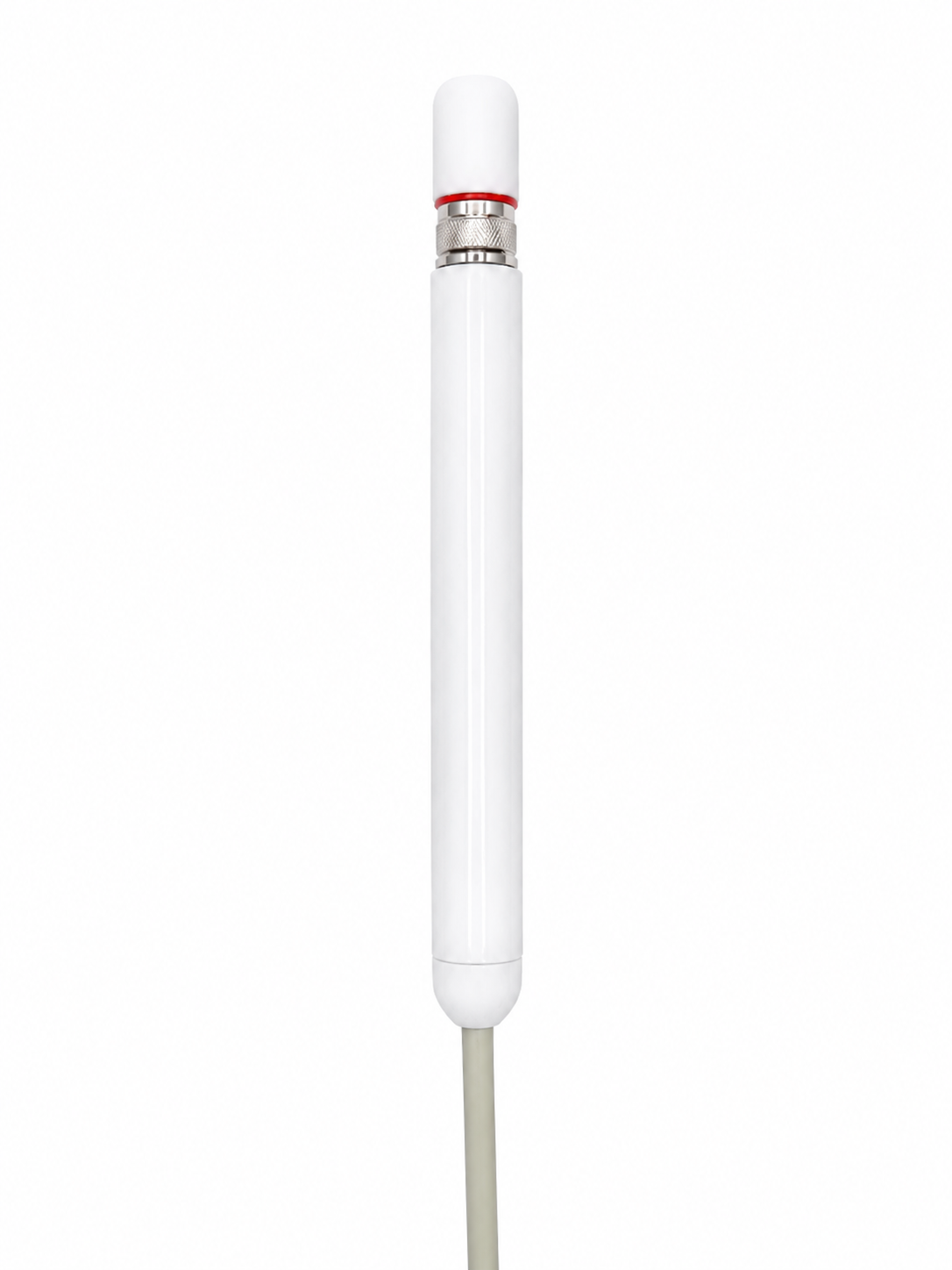
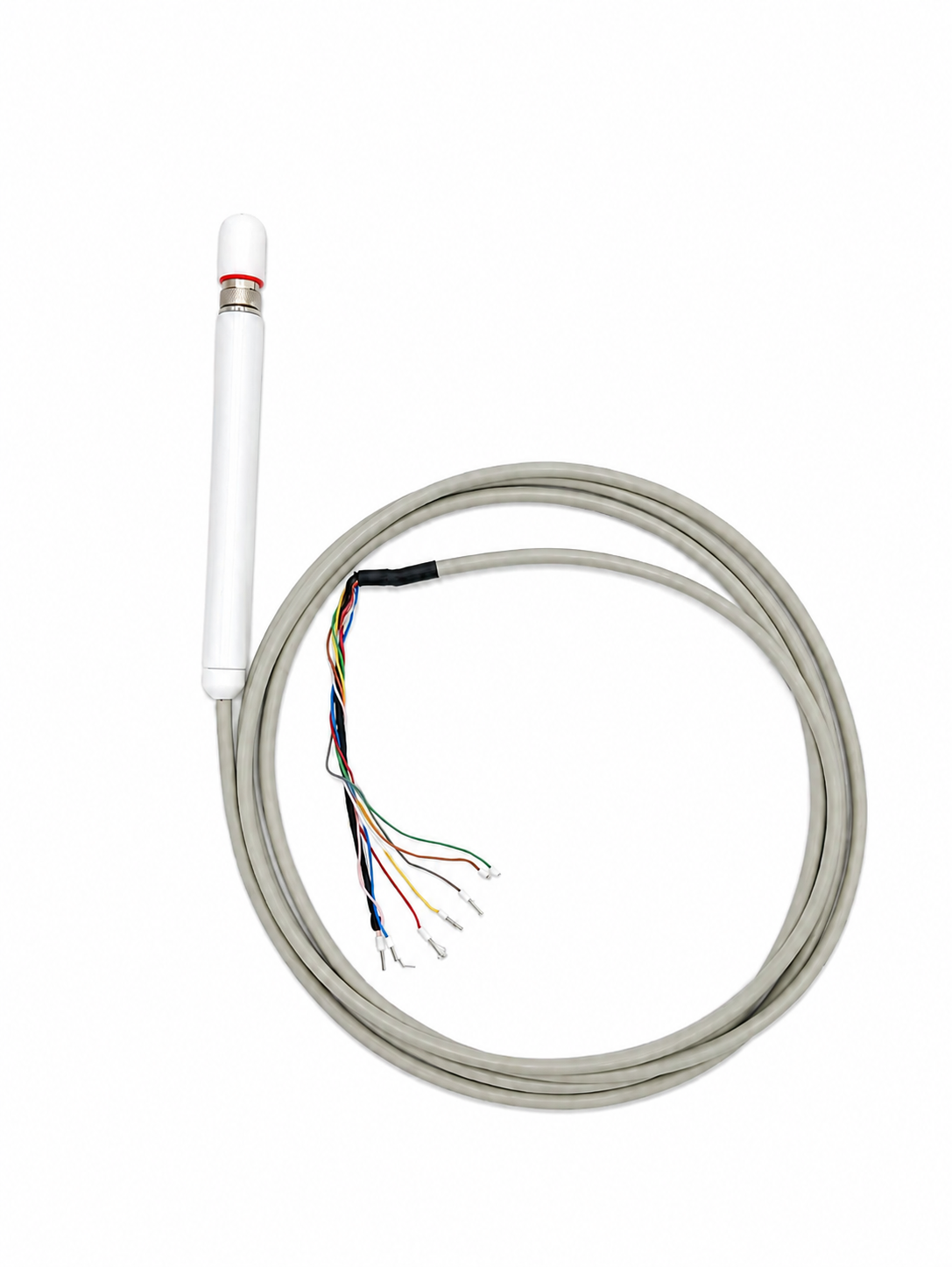
Thermo-Hygro-Barometer

Sensor ducts for measuring the temperature and relative humidity of the air in the environment or inside ducts.

In applications where dirty air is present, the sensor can be mounted inside the DYA225 screen in order to prevent dirt from accumulating directly on the sensitive element.

Description


Precise and reliable, these sensors measure temperature, relative humidity and, optionally, atmospheric pressure. They are suitable for continuous meteorological measurements, even under harsh climatic conditions. The interchangeable measuring head ensures a high level of sensor reliability. The sensor family includes models with analogue and digital outputs, which can be configured via software. The multi-parameter sensor also enables the onboard calculation of derived quantities. For outdoor applications, the sensors must be protected by a radiation shield..

Models without integrated pressure measurement are also available: https://lsi-lastem.com/it/prodotti/termo-igrometro/


  • Family of temperature and humidity sensors with integrated pressure measurement;
  • Interchangeable measuring head;
  • Fast recovery after humidity saturation thanks to a self-heating algorithm;
  • Output configuration through easily adjustable parameters;
  • Onboard calculation of derived quantities;
  • High-efficiency radiation shield;
  • Forced-ventilation radiation shield available;
  • Traceable to ISO/IEC 17025 standards.
  • Model codes: PRTHL1110, PRTHL1111, PRTHL1310, PRTHL1311, PRTHL1210, PRTHL1211.


  1. High accuracy for all three environmental parameters

The PRTHL family provides accuracies of up to:

  • ±0.1 °C for air temperature;
  • ±1% RH for relative humidity;
  • ±0.15 hPa for atmospheric pressure.

An intelligent self-heating algorithm applied to the sensing element also promotes rapid recovery of measurement capability after humidity saturation conditions.

  1. Easy integration into different data acquisition systems

PRTHL sensors feature software-configurable analogue and digital outputs and support a wide range of communication interfaces, including mV, 4–20 mA, UART, RS-232, RS-485 and SDI-12.

The different available configurations make it possible to select the model best suited to specific measurement requirements, from temperature and humidity monitoring to complete temperature, humidity and barometric pressure measurement.

  1. Faster maintenance directly in the field

The interchangeable, pre-calibrated measuring head can be replaced without removing the entire sensor from the installation. This solution simplifies maintenance operations, reduces intervention times and minimises system downtime.

  1. Derived quantities calculated onboard the sensor

In addition to the measured parameters, the PRTHL family can directly calculate a wide range of derived environmental quantities, even without the use of an external data logger.

These include: Dew Point Temperature (ISO 7726); Partial Vapour Pressure (ISO 7726, Table D.1 – Humidity Conversion Equations); Barometric Pressure – QNH, ICAO reference (Table 3.10 of “International Meteorological Tables – WMO No. 188, TP. 94 – 1966”); Barometric Pressure – QNH, ICAO reference (ISA Equation 7, CIMO, “CIMO/ET-Stand-1/Doc. 10 – 20 November 2012”); Barometric Pressure – QNH, ICAO reference (ICAO Equations 28/29, “CIMO/ET-Stand-1/Doc. 10 – 20 November 2012”; ICAO Documents 7488/9837); Sea-Level Atmospheric Pressure with Actual Atmospheric Temperature Gradient – QFF, WMO reference; Heat Index (National Oceanic and Atmospheric Administration – NOAA); Wet-Bulb Temperature calculated from Air Temperature and Relative Humidity (Roland Stull, University of British Columbia).


Which parameters does the thermo-hygro-barometer measure?

The sensor family measures air temperature and relative humidity and, in dedicated configurations, atmospheric pressure as well. Combining up to three meteorological parameters in a single compact sensor simplifies installation and reduces the number of devices that need to be integrated into the monitoring station. The different configurations make it possible to select the parameters best suited to each application.

What are the main strengths of the thermo-hygro-barometer?

The main advantages include high accuracy, measurement stability, configurability, an interchangeable measuring head and the ability to operate under demanding climatic conditions. The sensor also calculates several derived quantities directly onboard from the measured parameters, providing processed data without requiring all calculations to be performed by the data logger or external systems. Rapid recovery after saturation conditions also helps reduce the time required to resume representative measurements.

How is the thermo-hygro-barometer integrated into a weather station?

The sensor is available with different output signals and can be connected to LSI LASTEM data loggers or integrated into third-party data acquisition systems. This flexibility facilitates both the installation of new weather stations and the replacement or upgrading of sensors in existing systems. To ensure accurate temperature and humidity measurements, the sensor must be installed inside a naturally or forcibly ventilated radiation shield.

How does the thermo-hygro-barometer simplify maintenance and calibration?

The temperature and humidity sensing element is replaceable, allowing maintenance to be performed on the component most subject to drift without replacing the entire sensor. This reduces downtime and helps restore the sensor’s metrological performance more quickly. The sensor family is also designed to facilitate periodic checks and calibrations. Air temperature and relative humidity can be calibrated with metrological traceability at the LSI LASTEM ISO/IEC 17025-accredited laboratory.

Additional information

Applications

, , , , , , , , ,

Product PRTHL1011 - PRTHL1111 - PRTHL1311 - PRTHL1211 Categories , ,

Precise and reliable, these sensors measure temperature, relative humidity and, optionally, atmospheric pressure. They are suitable for continuous meteorological measurements, even under harsh climatic conditions. The interchangeable measuring head ensures a high level of sensor reliability. The sensor family includes models with analogue and digital outputs, which can be configured via software. The multi-parameter sensor also enables the onboard calculation of derived quantities. For outdoor applications, the sensors must be protected by a radiation shield..

Models without integrated pressure measurement are also available: https://lsi-lastem.com/it/prodotti/termo-igrometro/


  • Family of temperature and humidity sensors with integrated pressure measurement;
  • Interchangeable measuring head;
  • Fast recovery after humidity saturation thanks to a self-heating algorithm;
  • Output configuration through easily adjustable parameters;
  • Onboard calculation of derived quantities;
  • High-efficiency radiation shield;
  • Forced-ventilation radiation shield available;
  • Traceable to ISO/IEC 17025 standards.
  • Model codes: PRTHL1110, PRTHL1111, PRTHL1310, PRTHL1311, PRTHL1210, PRTHL1211.


  1. High accuracy for all three environmental parameters

The PRTHL family provides accuracies of up to:

  • ±0.1 °C for air temperature;
  • ±1% RH for relative humidity;
  • ±0.15 hPa for atmospheric pressure.

An intelligent self-heating algorithm applied to the sensing element also promotes rapid recovery of measurement capability after humidity saturation conditions.

  1. Easy integration into different data acquisition systems

PRTHL sensors feature software-configurable analogue and digital outputs and support a wide range of communication interfaces, including mV, 4–20 mA, UART, RS-232, RS-485 and SDI-12.

The different available configurations make it possible to select the model best suited to specific measurement requirements, from temperature and humidity monitoring to complete temperature, humidity and barometric pressure measurement.

  1. Faster maintenance directly in the field

The interchangeable, pre-calibrated measuring head can be replaced without removing the entire sensor from the installation. This solution simplifies maintenance operations, reduces intervention times and minimises system downtime.

  1. Derived quantities calculated onboard the sensor

In addition to the measured parameters, the PRTHL family can directly calculate a wide range of derived environmental quantities, even without the use of an external data logger.

These include: Dew Point Temperature (ISO 7726); Partial Vapour Pressure (ISO 7726, Table D.1 – Humidity Conversion Equations); Barometric Pressure – QNH, ICAO reference (Table 3.10 of “International Meteorological Tables – WMO No. 188, TP. 94 – 1966”); Barometric Pressure – QNH, ICAO reference (ISA Equation 7, CIMO, “CIMO/ET-Stand-1/Doc. 10 – 20 November 2012”); Barometric Pressure – QNH, ICAO reference (ICAO Equations 28/29, “CIMO/ET-Stand-1/Doc. 10 – 20 November 2012”; ICAO Documents 7488/9837); Sea-Level Atmospheric Pressure with Actual Atmospheric Temperature Gradient – QFF, WMO reference; Heat Index (National Oceanic and Atmospheric Administration – NOAA); Wet-Bulb Temperature calculated from Air Temperature and Relative Humidity (Roland Stull, University of British Columbia).


Which parameters does the thermo-hygro-barometer measure?

The sensor family measures air temperature and relative humidity and, in dedicated configurations, atmospheric pressure as well. Combining up to three meteorological parameters in a single compact sensor simplifies installation and reduces the number of devices that need to be integrated into the monitoring station. The different configurations make it possible to select the parameters best suited to each application.

What are the main strengths of the thermo-hygro-barometer?

The main advantages include high accuracy, measurement stability, configurability, an interchangeable measuring head and the ability to operate under demanding climatic conditions. The sensor also calculates several derived quantities directly onboard from the measured parameters, providing processed data without requiring all calculations to be performed by the data logger or external systems. Rapid recovery after saturation conditions also helps reduce the time required to resume representative measurements.

How is the thermo-hygro-barometer integrated into a weather station?

The sensor is available with different output signals and can be connected to LSI LASTEM data loggers or integrated into third-party data acquisition systems. This flexibility facilitates both the installation of new weather stations and the replacement or upgrading of sensors in existing systems. To ensure accurate temperature and humidity measurements, the sensor must be installed inside a naturally or forcibly ventilated radiation shield.

How does the thermo-hygro-barometer simplify maintenance and calibration?

The temperature and humidity sensing element is replaceable, allowing maintenance to be performed on the component most subject to drift without replacing the entire sensor. This reduces downtime and helps restore the sensor’s metrological performance more quickly. The sensor family is also designed to facilitate periodic checks and calibrations. Air temperature and relative humidity can be calibrated with metrological traceability at the LSI LASTEM ISO/IEC 17025-accredited laboratory.

Related Products