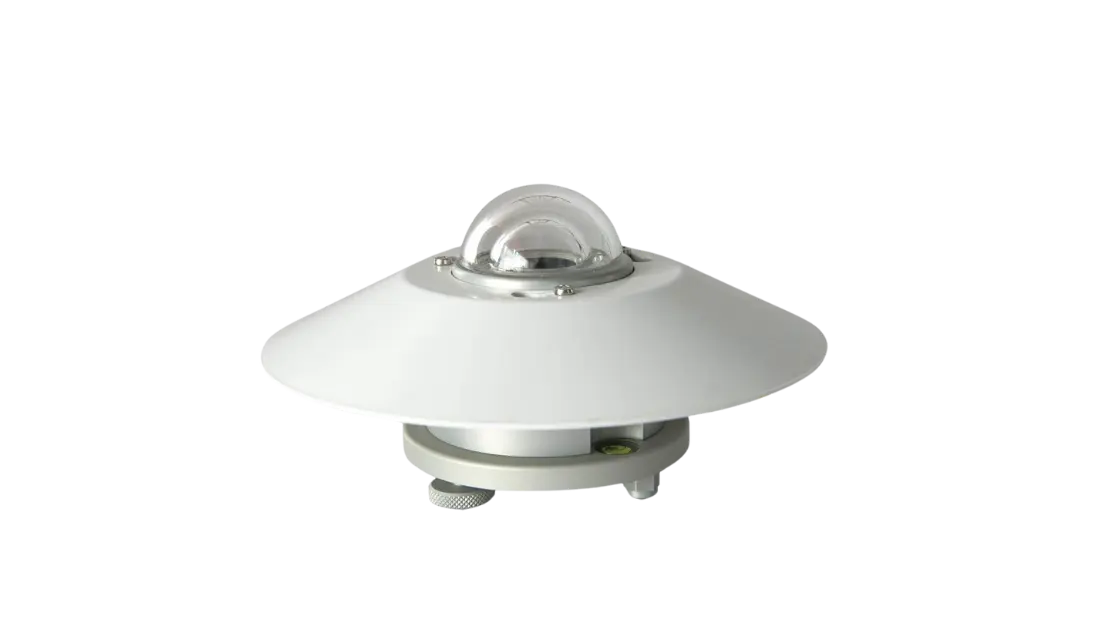
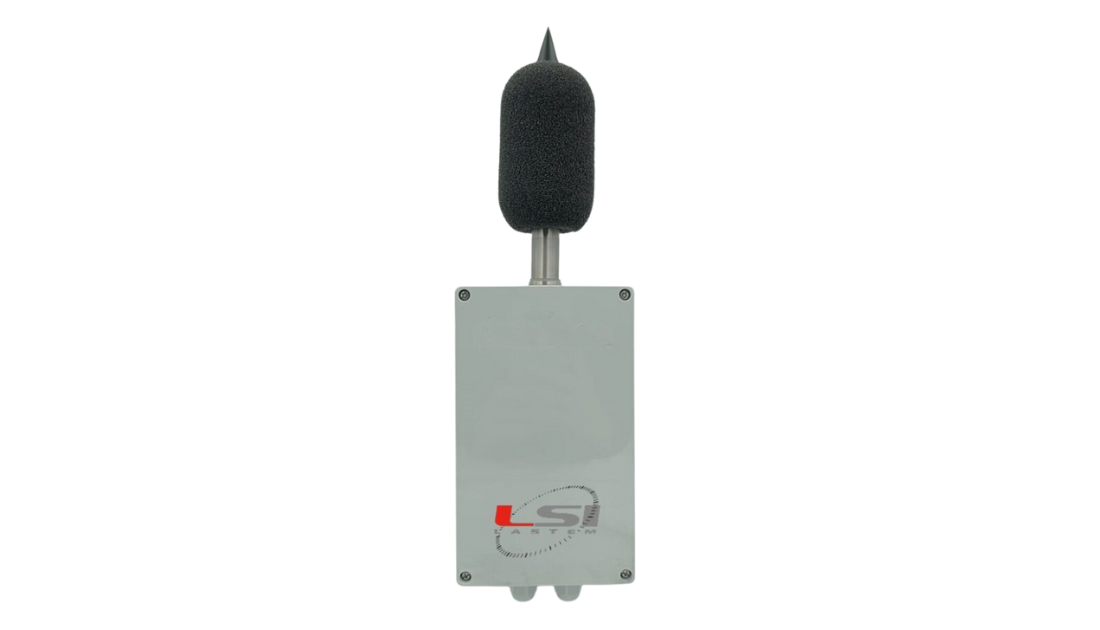
Class B pyranometers
Sensors for measuring global irradiation
Radiometers forsolar irradiance measurement according to ISO9060 and WMO No.8 (Part I, Ch.7).
These sensors are classified as Class B ISO9060. With a total daily uncertainty of 5%, flat spectral response (285-3000 nm) and excellent temperature stability, they are an excellent compromise between cost and quality of irradiance measurement.
DATA SHEET
Description
Description
Class B pyranometers
Highlights
- Pyranometers spectrally flat Class B (First Class. Compliant with EC 61724-1: 2017;
- Electrical insulation (DPA855-980), Galvanic insulation (DPA980);
- WRR traceable calibration;
- Modbus registers for instantaneous values, Average/Min/Max values over programmable period (DPA980)
- Power supply 10…30 Vac/dc (DPA855/980);
- Ideal sensor for monitoring the performance of solar panels and weather network;
- Model codes: DPA154, DPA980, DPA855.
FAQ: Frequently Asked Questions
When is a Class B pyranometer recommended?
A Class B pyranometer is recommended when reliable solar irradiance measurements are required, but the highest performance levels of Class A are not necessary. It therefore offers a good balance between accuracy, stability, and cost for meteorology, agrometeorology, environmental networks, and technical monitoring applications.
What is the difference between a Class A and a Class B pyranometer?
Both classes are defined by ISO 9060:2018, but Class A instruments must meet stricter requirements for stability, directional response, temperature dependence, non-linearity, and response time. Class B is suitable when technically sound and comparable measurements are needed, while keeping costs and system complexity lower than with a Class A solution.
Which standards do LSI LASTEM Class B pyranometers comply with?
LSI LASTEM pyranometers are classified as Spectrally Flat Class B according to ISO 9060:2018 and are designed in accordance with the recommendations of WMO No. 8, Part I, Chapter 7, concerning solar radiation measurement. This makes them suitable for meteorological networks, environmental monitoring, and technical applications requiring reliable and comparable data.
Which features make LSI LASTEM Class B pyranometers reliable?
LSI LASTEM pyranometers offer a flat spectral response between 285 and 3000 nm, good temperature stability, and calibration traceable to the World Radiometric Reference. The range includes versions with direct output, 0/4–20 mA, and RS485 Modbus, facilitating integration into weather stations and environmental monitoring systems.
Product
DPA154-DPA980-DPA855
Categories Meteo sensors, Solar radiation
Class B pyranometers
Highlights
- Pyranometers spectrally flat Class B (First Class. Compliant with EC 61724-1: 2017;
- Electrical insulation (DPA855-980), Galvanic insulation (DPA980);
- WRR traceable calibration;
- Modbus registers for instantaneous values, Average/Min/Max values over programmable period (DPA980)
- Power supply 10…30 Vac/dc (DPA855/980);
- Ideal sensor for monitoring the performance of solar panels and weather network;
- Model codes: DPA154, DPA980, DPA855.
FAQ: Frequently Asked Questions
When is a Class B pyranometer recommended?
A Class B pyranometer is recommended when reliable solar irradiance measurements are required, but the highest performance levels of Class A are not necessary. It therefore offers a good balance between accuracy, stability, and cost for meteorology, agrometeorology, environmental networks, and technical monitoring applications.
What is the difference between a Class A and a Class B pyranometer?
Both classes are defined by ISO 9060:2018, but Class A instruments must meet stricter requirements for stability, directional response, temperature dependence, non-linearity, and response time. Class B is suitable when technically sound and comparable measurements are needed, while keeping costs and system complexity lower than with a Class A solution.
Which standards do LSI LASTEM Class B pyranometers comply with?
LSI LASTEM pyranometers are classified as Spectrally Flat Class B according to ISO 9060:2018 and are designed in accordance with the recommendations of WMO No. 8, Part I, Chapter 7, concerning solar radiation measurement. This makes them suitable for meteorological networks, environmental monitoring, and technical applications requiring reliable and comparable data.
Which features make LSI LASTEM Class B pyranometers reliable?
LSI LASTEM pyranometers offer a flat spectral response between 285 and 3000 nm, good temperature stability, and calibration traceable to the World Radiometric Reference. The range includes versions with direct output, 0/4–20 mA, and RS485 Modbus, facilitating integration into weather stations and environmental monitoring systems.