



Soil moisture and temperature
Sensors for measuring the temperature and volumetric content of water
Series of sensors designed to measure inside soils or other porous materials.
Sensor with TDR technology (Time Domain Reflectometry)
DATA SHEETS
Description
Description
Description
This sensor is the ideal solution for the measurement of volumetric moisture in soils and other porous materials.
The sensor is based on TDR technology (Time Domain Reflectometry), ensuring good accuracy even in very wet soils, and without special calibration for mineral soils.
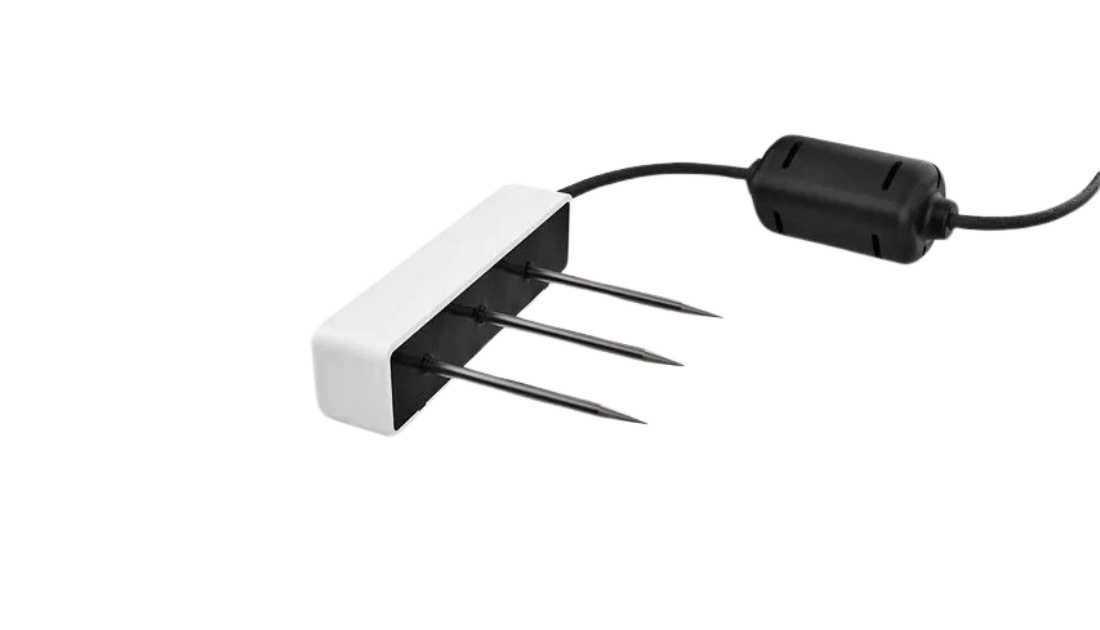
Using its rods, the sensor can be inserted in the material for 11 cm or fully buried inside the soil.
Highlights
- TDR (Time Domain Reflectrometry) technology;
- Water volume % and soil temperature measurements;
- Very good accuracy: < 2%;
- Mezzo metro di volume di terreno campionato;
- Model codes: DQA340, PRMPA1202, PRMPA1205, PRMPA1206, PRMPA1207, PRMPA1208, PRMPA1209.
FAQ: Frequently Asked Questions
What is a soil moisture and temperature sensor used for?
The sensor simultaneously measures volumetric water content and the temperature of soil or other porous materials. In agriculture and agrometeorology, these data make it possible to monitor water availability in the root zone, optimise irrigation, and assess the conditions that influence germination and crop development. In environmental and meteorological observations, they support the study of water and energy exchanges between the soil and the atmosphere.
How is volumetric water content measured?
The sensor uses TDR, Time Domain Reflectometry, technology, which determines water content by analysing the dielectric properties of the soil. This technique provides accurate measurements even in very wet soils and, in mineral soils, does not require a specific calibration for each soil type. The result expresses the volume of water in relation to the total volume of soil analysed.
How is the sensor installed in the soil?
The electrodes must be fully inserted into the soil, ensuring uniform contact with the material and limiting the formation of air gaps, which could affect the measurement. The sensor can be installed with the electrodes inserted to a depth of 11 cm or completely buried, depending on the depth and soil layer to be monitored.
Which characteristics make it suitable for continuous monitoring?
The sensor measures both volumetric water content and soil temperature, with a stated accuracy of better than 2% for water content. It can be integrated into data acquisition systems to record parameter trends over time and compare them with precipitation, irrigation, and meteorological conditions.
Additional information
Additional information
| Applications | |
|---|---|
| Grandezze |
Product
DQA340-PRMPA1202-PRMPA1205-PRMPA1206-PRMPA1207-PRMPA1208-PRMPA1209
Categories Meteo sensors, Sensors, Soil moisture and temperature
Description
This sensor is the ideal solution for the measurement of volumetric moisture in soils and other porous materials.
The sensor is based on TDR technology (Time Domain Reflectometry), ensuring good accuracy even in very wet soils, and without special calibration for mineral soils.
Using its rods, the sensor can be inserted in the material for 11 cm or fully buried inside the soil.
Highlights
- TDR (Time Domain Reflectrometry) technology;
- Water volume % and soil temperature measurements;
- Very good accuracy: < 2%;
- Mezzo metro di volume di terreno campionato;
- Model codes: DQA340, PRMPA1202, PRMPA1205, PRMPA1206, PRMPA1207, PRMPA1208, PRMPA1209.
FAQ: Frequently Asked Questions
What is a soil moisture and temperature sensor used for?
The sensor simultaneously measures volumetric water content and the temperature of soil or other porous materials. In agriculture and agrometeorology, these data make it possible to monitor water availability in the root zone, optimise irrigation, and assess the conditions that influence germination and crop development. In environmental and meteorological observations, they support the study of water and energy exchanges between the soil and the atmosphere.
How is volumetric water content measured?
The sensor uses TDR, Time Domain Reflectometry, technology, which determines water content by analysing the dielectric properties of the soil. This technique provides accurate measurements even in very wet soils and, in mineral soils, does not require a specific calibration for each soil type. The result expresses the volume of water in relation to the total volume of soil analysed.
How is the sensor installed in the soil?
The electrodes must be fully inserted into the soil, ensuring uniform contact with the material and limiting the formation of air gaps, which could affect the measurement. The sensor can be installed with the electrodes inserted to a depth of 11 cm or completely buried, depending on the depth and soil layer to be monitored.
Which characteristics make it suitable for continuous monitoring?
The sensor measures both volumetric water content and soil temperature, with a stated accuracy of better than 2% for water content. It can be integrated into data acquisition systems to record parameter trends over time and compare them with precipitation, irrigation, and meteorological conditions.


