Evaporation
System for measuring evaporation
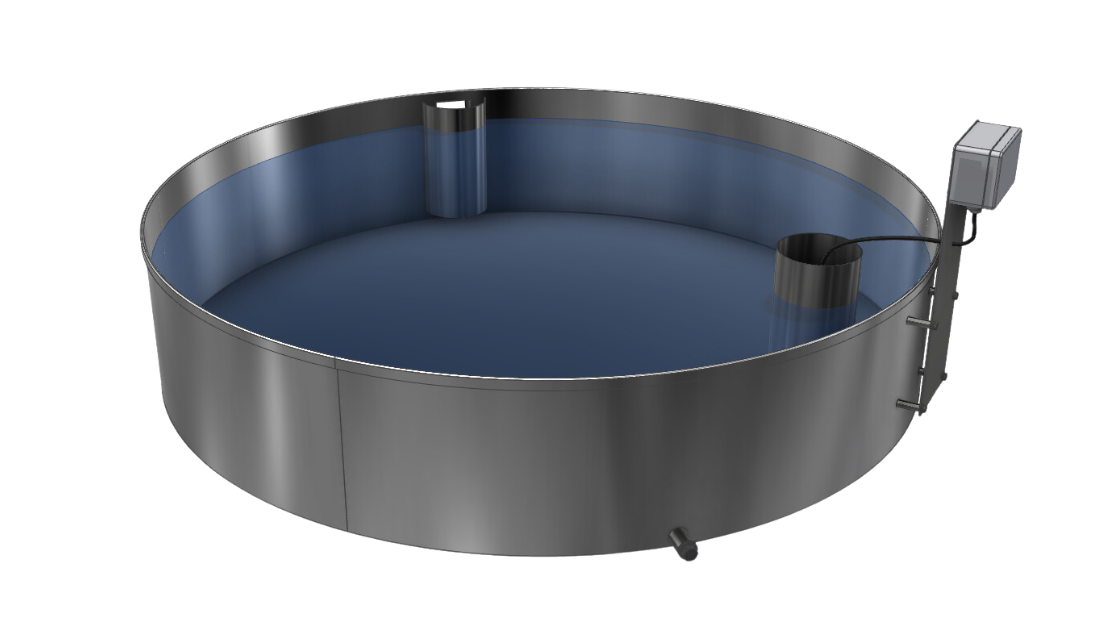
Evaporimeter pan and plastic platform are built to WMO standards for class “A” evaporimeters.
The pan is made in stainless steel. The pan features a stainless steel still well fit to contain the evaporimeter level sensor. The sensor consists of a piezometric water level sensor with analogue output for easy connection to any data acquisition systems.
Data loggers can manage the switching of a solenoid valve for the automatic refill of water (when the measured level is below 25 cm).
The platform is made of white plastic to reduce the heat accumulation effect.
DATA SHEETS
Description
Description
Evaporation
Highlights
- Class A evaporation pan design acconding to WMO;
- Evaporation derived calculation using LSI LASTEM’s acquisition systems;
- Automatic water refill system;
- High accuracy and resolution piezometric water level sensor;
- Stainless steel assembling;
- Model code: DYI010.
FAQ: Frequently Asked Questions
What is an evaporation measurement system used for?
The system measures evaporation from a free water surface exposed to atmospheric conditions. The pan integrates the combined effects of solar radiation, air temperature, humidity, and wind, providing useful data for meteorological observations, agrometeorology, and water-balance studies. The measurement can also support irrigation and water-resource management.
What is the difference between measuring evaporation with a pan and estimating it with a model?
A model estimates evaporation from meteorological variables and mathematical relationships. An evaporation pan instead observes the process that actually occurs at the site: a piezometric sensor measures changes in water level, and the acquisition system converts them into evaporation values. This approach provides data directly related to local conditions without relying exclusively on model assumptions. However, measurement reliability still depends on correct installation, operation, and maintenance of the pan.
Why is design in accordance with WMO recommendations important?
The geometry, materials, water level, and exposure of the pan can all influence the result. The LSI LASTEM system uses a Class A evaporation pan and platform designed in accordance with WMO recommendations, providing a standardised configuration and supporting data comparability over time and between different sites. The pan and stilling well are made of stainless steel, while the white platform helps limit heat accumulation.
How is measurement continuity maintained?
The piezometric sensor continuously monitors the water level inside the stilling well. When the level falls below the set threshold, the data logger can control a solenoid valve to refill the pan automatically. This helps maintain more consistent measurement conditions and reduces manual intervention, improving monitoring continuity. For correct data interpretation, precipitation, refilling events, and other water-level variations not caused by evaporation must also be considered.
Additional information
Additional information
| Grandezze | |
|---|---|
| Applications |
Product
DYI010
Categories Evaporation, Meteo sensors, Sensors
Evaporation
Highlights
- Class A evaporation pan design acconding to WMO;
- Evaporation derived calculation using LSI LASTEM’s acquisition systems;
- Automatic water refill system;
- High accuracy and resolution piezometric water level sensor;
- Stainless steel assembling;
- Model code: DYI010.
FAQ: Frequently Asked Questions
What is an evaporation measurement system used for?
The system measures evaporation from a free water surface exposed to atmospheric conditions. The pan integrates the combined effects of solar radiation, air temperature, humidity, and wind, providing useful data for meteorological observations, agrometeorology, and water-balance studies. The measurement can also support irrigation and water-resource management.
What is the difference between measuring evaporation with a pan and estimating it with a model?
A model estimates evaporation from meteorological variables and mathematical relationships. An evaporation pan instead observes the process that actually occurs at the site: a piezometric sensor measures changes in water level, and the acquisition system converts them into evaporation values. This approach provides data directly related to local conditions without relying exclusively on model assumptions. However, measurement reliability still depends on correct installation, operation, and maintenance of the pan.
Why is design in accordance with WMO recommendations important?
The geometry, materials, water level, and exposure of the pan can all influence the result. The LSI LASTEM system uses a Class A evaporation pan and platform designed in accordance with WMO recommendations, providing a standardised configuration and supporting data comparability over time and between different sites. The pan and stilling well are made of stainless steel, while the white platform helps limit heat accumulation.
How is measurement continuity maintained?
The piezometric sensor continuously monitors the water level inside the stilling well. When the level falls below the set threshold, the data logger can control a solenoid valve to refill the pan automatically. This helps maintain more consistent measurement conditions and reduces manual intervention, improving monitoring continuity. For correct data interpretation, precipitation, refilling events, and other water-level variations not caused by evaporation must also be considered.